Léon Loïcq de Lobel
Historical reconstruction of one of the earliest promoters of a railway connection between Eurasia and North America across the Bering Strait.
Léon Loïcq de Lobel (1859–1922)
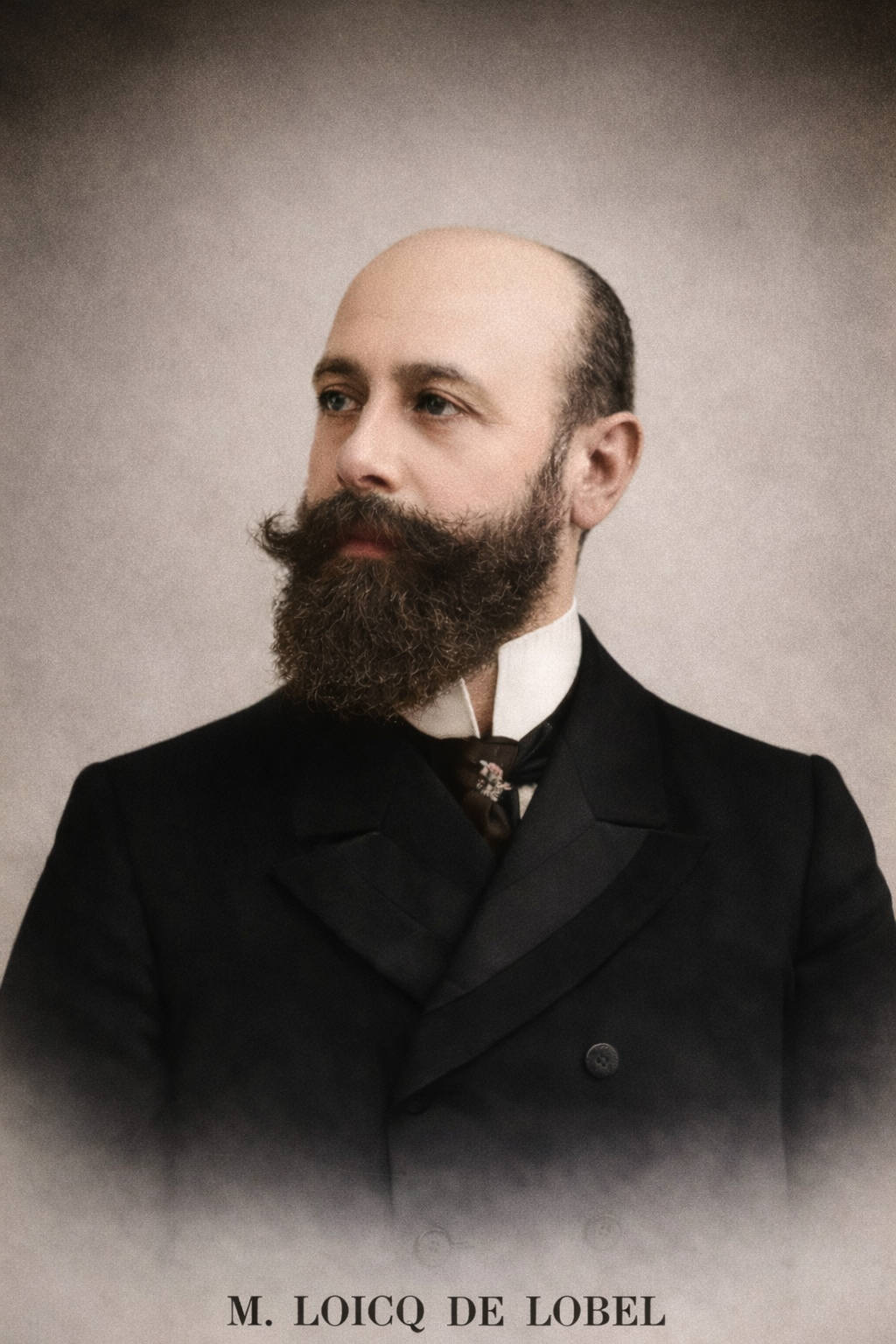
Click image to enlarge
|
Overview. This article reconstructs the life and campaign of Léon Loïcq de Lobel, one of the earliest promoters of a railway connection between Eurasia and North America across the Bering Strait. Drawing on contemporary newspapers, diplomatic documents, and later historical research, it traces the rise and fall of the first international attempt to transform the Bering Strait crossing from a dream into a political project.
| Full name: | Pierre Louis Victor Léon Loïcq de Lobel |
| Born: | 9 September 1859, Bastogne (today Belgium) |
| Died: | 8 May 1922, Paris, France |
| Occupation: | Engineer, explorer, infrastructure promoter |
| Known for: | Promoting an early proposal for a railway linking North America and Eurasia across the Bering Strait |
| Major proposal: | “World Intercontinental Railway” connecting New York and Paris via Canada, Alaska, and Siberia |
| Key activity period: | 1898–1907 |
| Notable publication: | Le Klondyke, l’Alaska, le Yukon et les Îles Aléoutiennes (1899) |
| Historical significance: | One of the earliest international promoters of a permanent transport link between Eurasia and North America. |
|
Part 1. Why de Lobel Matters
Readers encountering the name of Leon Loicq de Lobel (often written as Léon Loïcq de Lobel) in connection with the Bering Strait railway proposal often ask a simple question: why does he appear in the story at all? The reason lies in his role as one of the earliest promoters who attempted to transform the idea of an intercontinental railway between Russia and the United States into an organized international enterprise. As described in the historical feature
“San Francisco to Saint Petersburg by Rail!”
, de Lobel emerged in the first years of the twentieth century as a figure trying to bring together engineers, financiers, and government authorities around the concept of a railway link across the Bering Strait.
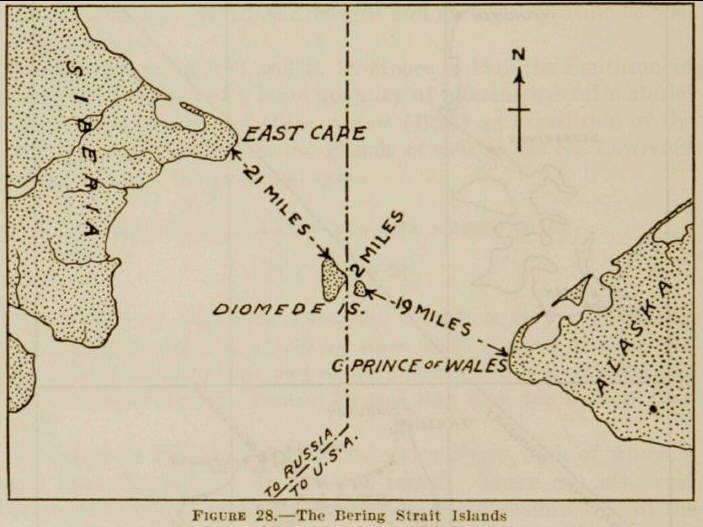
Historic map of the Bering Strait showing the Diomede Islands between Asia and North America.
Two small islands are situated midway between the continental land masses.
Big Diomede Island belongs to Russia;
Little Diomede Island belongs to the United States.
The islands are separated by approximately two miles — and by the
International Date Line.
Source: InterBering Historical Archive
The history of a Bering Strait fixed link is often told as an engineering riddle—distance, depth, ice, permafrost, storms, and money. Yet from the very beginning the decisive questions were also institutional: Who controls the corridor? Who finances the surveys? Who grants concessions? Who polices the borders? Who is trusted to dig, to build, and to operate?
Léon Loicq de Lobel matters because he helped transform a grand idea into an early, internationally negotiated campaign. He attempted to do what modern infrastructure promoters still try to accomplish: translate a bold concept into practical steps that appear actionable—permissions, surveys, syndicates, letters of support, influential patrons, and governmental authorization. His story shows how a megaproject lives or dies not only in parliaments or in financial markets, but sometimes in the disposition of a few offices—and, at critical moments, in the judgment of a single decision-maker.
In the end, however, the project did not fail for lack of imagination. It faltered because the political conditions of the early twentieth century made the proposed structure of international participation—especially anything resembling foreign control over Russian territory and resources—unacceptable.
In period commentary and later retellings, de Lobel is described in different ways: sometimes as a French engineer and aristocrat (even styled a “Baron”), and elsewhere as an American promoter of Polish descent. These portraits cannot all be simultaneously correct in a strict sense. Yet the contradiction itself is historically instructive. Early megaproject promotion often relied on identity and affiliation as instruments of persuasion. Prestige opened doors; technical credentials built confidence; international associations signaled capacity.
What remains consistent across the available sources is the functional role he played. De Lobel acted as an intermediary between French financial and social circles, Russian ministries and court-linked influence, and American railroad and capital networks. He pursued travel, documentation, permissions, and public attention—the practical scaffolding without which no great infrastructure vision can move beyond talk.
↑ Back to top
◆ ◆ ◆
Part 2. Origins of Léon Loicq de Lobel
Pierre Louis Victor Léon Loïcq de Lobel (9 September 1859 — 8 May 1922) was an engineer, explorer, and energetic promoter of international infrastructure whose name became briefly associated with one of the boldest transportation visions of the early twentieth century: a railway connection between North America and Asia across the Bering Strait. Known in contemporary newspapers as Baron Loïcq de Lobel (often spelled Léon Loïcq de Lobel), he was born on 9 September 1859 in the town of Bastogne.
Today Bastogne lies in Belgium, but in the mid-nineteenth century it formed part of a French-speaking cultural region of the Ardennes, historically influenced by both French and Belgian political spheres. This linguistic and cultural setting helps explain why later accounts sometimes described de Lobel as French, even though his birthplace is now located within modern Belgian territory. His later professional life unfolded largely in France, and many contemporary references identify him primarily with French scientific and engineering circles.
De Lobel styled himself a “Baron” and moved comfortably within the associative world of late nineteenth-century French learned societies and public lectures. Biographical notices describe him as an engineer and explorer and record his membership in the Société française de géographie. During the closing years of the nineteenth century he undertook northern expeditions and exploratory travels together with members of his family, reflecting the era’s blend of scientific curiosity, geographic exploration, and social prestige.
His household was not merely along for the journey. Contemporary accounts note that his wife, Julie, assembled a substantial botanical collection during their travels. Her herbarium was later preserved within France’s natural history collections—a small but revealing detail about the scientific spirit that accompanied many expeditions of that era.
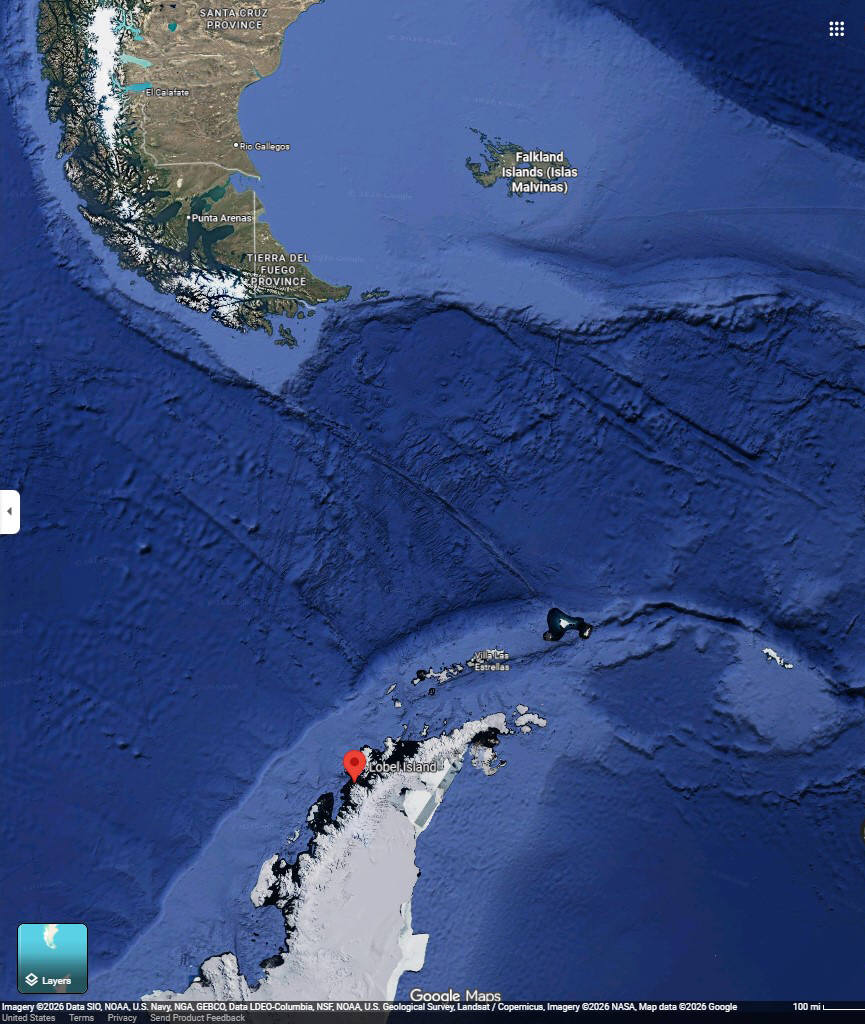
Location of Lobel Island in the Wauwermans Islands,
Wilhelm Archipelago, Antarctica.
The island was named during the French Antarctic Expedition
(1903–1905) led by Jean-Baptiste Charcot in honor of
Léon Loïcq de Lobel.
Illustrative map prepared for InterBering historical archive.
De Lobel’s reputation as a promoter of grand geographic undertakings spread widely. Even in remote regions of the world his name appeared on the map: an island off the Antarctic Peninsula was recorded by early twentieth-century polar explorers as Lobel-Insel, a dedication associated with the publicity surrounding his proposal for an Alaska–Siberia railway connection in 1906.
In period commentary and later retellings, de Lobel himself is described in different ways: sometimes as a French engineer and aristocrat, and elsewhere as an American promoter of Polish descent. These portraits cannot all be simultaneously correct in a strict sense. Yet the contradiction is historically instructive. Early megaproject promotion often relied on identity and affiliation as instruments of persuasion. Prestige opened doors; technical credentials built confidence; and international associations signaled capacity.
Even sympathetic summaries portray de Lobel as a hybrid figure—part technical enthusiast, part geopolitical visionary, and part relentless negotiator. He pursued influence the way a builder pursues right-of-way: through introductions, committees, patronage, and the careful accumulation of official-sounding endorsements. Moving between Paris, New York, and St. Petersburg, he attempted to assemble an international coalition of financiers, engineers, and political patrons capable of turning a daring idea into a practical enterprise.
His campaign reached its dramatic peak in 1906, when Russian authorities briefly signaled a willingness to consider preliminary surveys connected with a transcontinental railway linking Siberia with Alaska. The effort ended the following year, in 1907, when the Russian government declined to grant the sweeping land concessions that foreign backers expected. The episode remains an early and vivid case study of how megaprojects rise or fall not only on engineering feasibility, but on sovereignty, finance, and the decisions of a small number of powerful individuals.
↑ Back to top
◆ ◆ ◆
Part 3. Alaska and the Klondike, 1898–1899
Before Léon Loïcq de Lobel became associated with the ambitious idea of a railway linking Eurasia and North America across the Bering Strait, he had already traveled through the far North. In 1898, at the height of the Klondike gold rush, he visited Alaska and the Yukon region. According to contemporary reports, he traveled as an agent of the French government and presented himself as a “scientific mining expert” and chemist studying conditions in the rapidly developing mining districts.
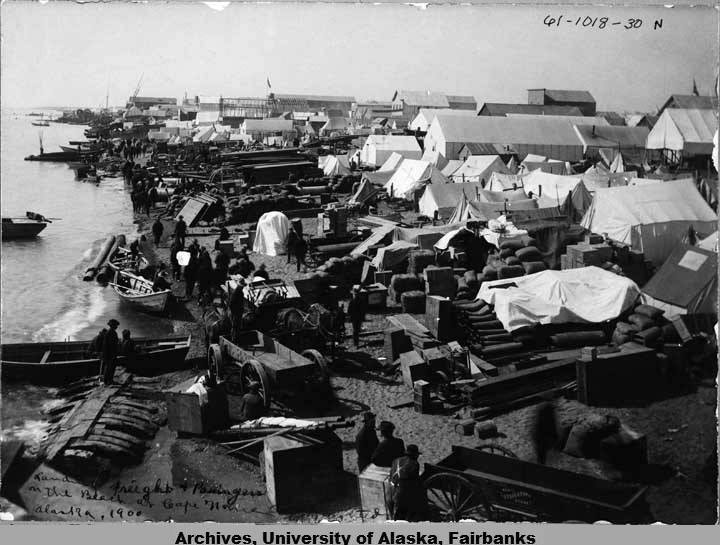
Landing freight & passengers on the beach at Cape Nome, Alaska, 1900.
During the Klondike and Nome gold rush era, supplies and travelers were often transferred directly onto the shore because no harbor facilities yet existed.
Such scenes illustrate the frontier conditions encountered by explorers and promoters visiting Alaska at the end of the nineteenth century — including those whose travels helped inspire visions of a future intercontinental railway.
Source:
University of Alaska Fairbanks Archives
The most dedicated and persistent promoters of the Bering Strait railway crossing could easily have been mistaken for eccentrics. One such figure was the Frenchman known in the press as Baron Loïcq de Lobel. After several months in the Klondike gold fields during 1898, he arrived in San Francisco that October and attracted attention with an unusual proposal. De Lobel announced that he had devised a method to sterilize the environment of Dawson City and eliminate outbreaks of typhoid fever and other diseases “by running powerful currents of electricity through the ground, according to the latest French discoveries, to destroy all disease germs.”
Traveling with de Lobel when he landed in San Francisco was the well-known northern entrepreneur
John J. Healy.
Healy, nearly sixty years old at the time, had already lived a remarkable frontier life. Born in Ireland, he emigrated to North America as a boy and spent decades in the American West and northern Canada. As a young man he fought in the Indian Wars and later gained a reputation across Idaho, Montana, and the Yukon for his activities as a buffalo hunter, miner, trader, and lawman. By the mid-1880s he had moved to Alaska, well before the gold rush, and in 1892 he founded the North American Transportation and Trading Company, which became one of the largest commercial operations in the Yukon Valley.
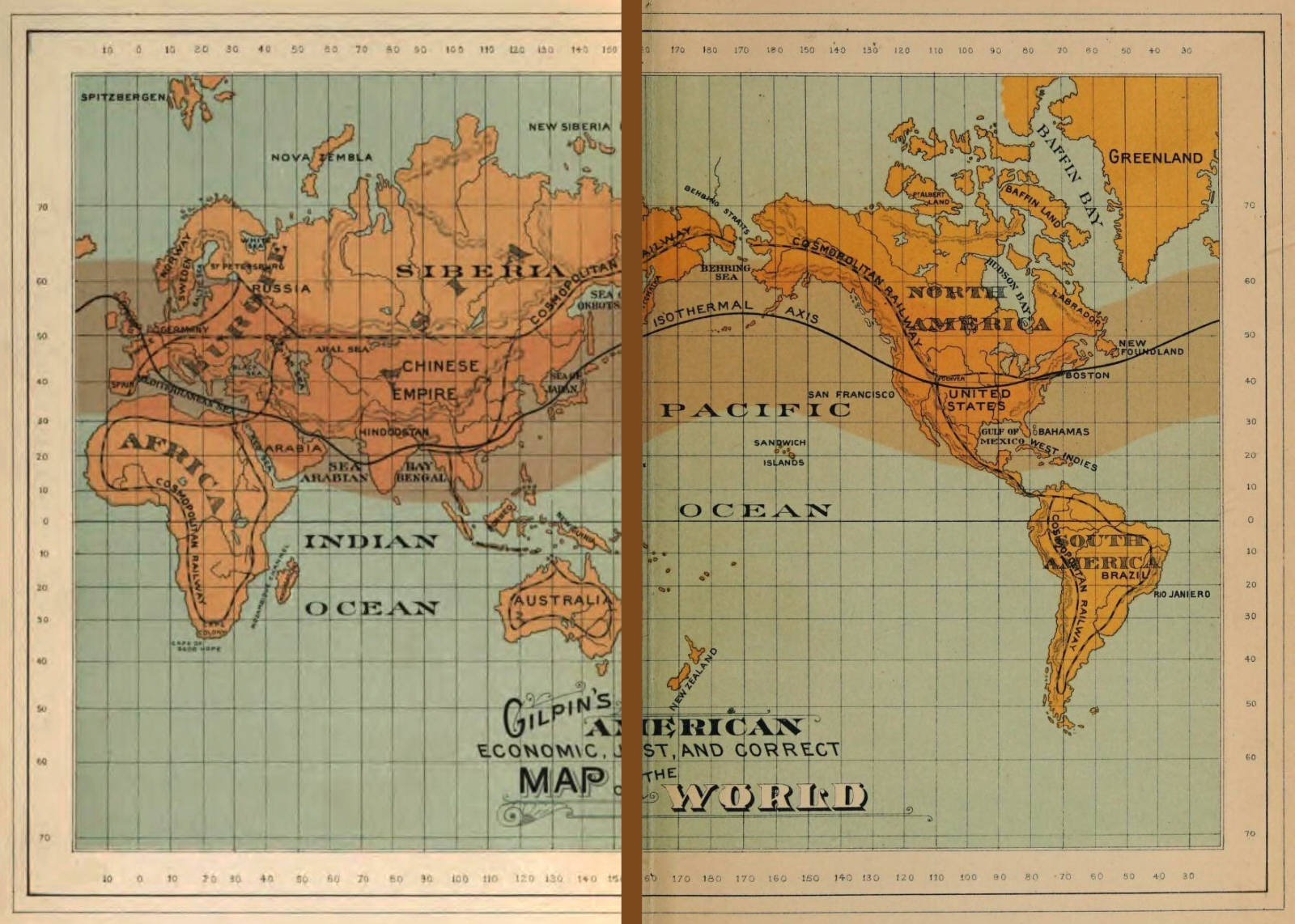
Accounts of the origins of the transcontinental railway idea differ. De Lobel later suggested that he himself conceived the plan for a railway connecting the continents. Healy, however, credited the earlier writings of
Governor William Gilpin,
whose visionary book
The Cosmopolitan Railway: Compacting and Fusing Together All the World’s Continents
(1890) had already proposed the idea of a global railway network linking Europe, Asia, and the Americas. Whether the inspiration came from personal reflection or from earlier literature, the conversations between de Lobel and frontier entrepreneurs such as Healy appear to have played an important role in shaping the idea into a concrete promotional campaign.
De Lobel later documented his northern journey in a work published in 1899 titled
Le Klondyke, l’Alaska, le Yukon et les Îles Aléoutiennes,
a forty-eight page study originally printed in the Bulletin de la Société de Géographie and later issued as a separate volume. The publication described geography, transportation routes, and the economic potential of the northern Pacific region during the years immediately following the gold rush.
By itself, a travel account does not build a railway. But in the world of early twentieth-century promotion, travel served as a form of credentialing. It suggested familiarity with terrain, ports, coastlines, and the practical obstacles that purely theoretical proposals often ignored. It also positioned de Lobel at a moment when international interest in the far North—Alaska, Chukotka, the Aleutian Islands, and the Yukon—was rapidly growing among governments, financiers, and scientific societies.
This context matters because the Bering Strait vision was never simply a tunnel. It represented an entire transportation corridor stretching across immense distances. Anyone promoting such a project needed to speak credibly about coastlines, routes, and the broader geography of the North Pacific rim. De Lobel’s travels in Alaska and the Klondike, together with his subsequent publication, formed part of the foundation that later allowed him to present himself as a knowledgeable advocate for an intercontinental railway.
↑ Back to top
◆ ◆ ◆
Part 4. A Wider Moment, 1898–1906: Harriman, Expeditions, and the “Trans–Alaska–Siberian Railway”
De Lobel was not alone in imagining a rail connection between North America and Asia. Between the late 1890s and the mid-1900s, the concept circulated widely in the world’s press and in political and financial circles. Some later accounts even claim that, from roughly 1898 to 1906, thousands of articles and reports discussed versions of a plan to connect America with Asia and Europe by rail through Siberia—an early twentieth-century counterpart to what we would now call a global infrastructure “corridor.”
In this atmosphere, the Bering Strait idea could be framed not as a lone visionary’s fantasy, but as a strategic extension of existing rail empires. The plan was linked in the public imagination to some of the most powerful names in American finance and railroading, and it attracted attention from Russia and France as well. Whether every detail in later retellings is reliable, the overall picture is clear: the project language of the era combined science, exploration, investment, and geopolitics into a single persuasive narrative about “connecting continents.”
It is useful to recall, from beginning to end, the history of the so-called “Trans–Alaska–Siberian Railway.” Doing so helps the reader understand what kinds of political and economic risks Russian officials perceived in foreign-led schemes that touched the Russian Far East—even before the better-known negotiations of 1906–1907.
1899–1904: Harriman’s Alaska Expedition, De Windt’s Journey, and Early Visions of a Paris–New York Railway
In 1899, the Washington Academy of Sciences cooperated in organizing a major scientific expedition to Alaska financed by the American railroad magnate
Edward Henry Harriman
. The ambitious venture—later known as the
Harriman Alaska Expedition
—brought together a remarkable group of scientists and specialists representing many disciplines, including geography, geology, botany, zoology, and meteorology. Their mission was to document the largely unexplored coastal regions of Alaska and the North Pacific.
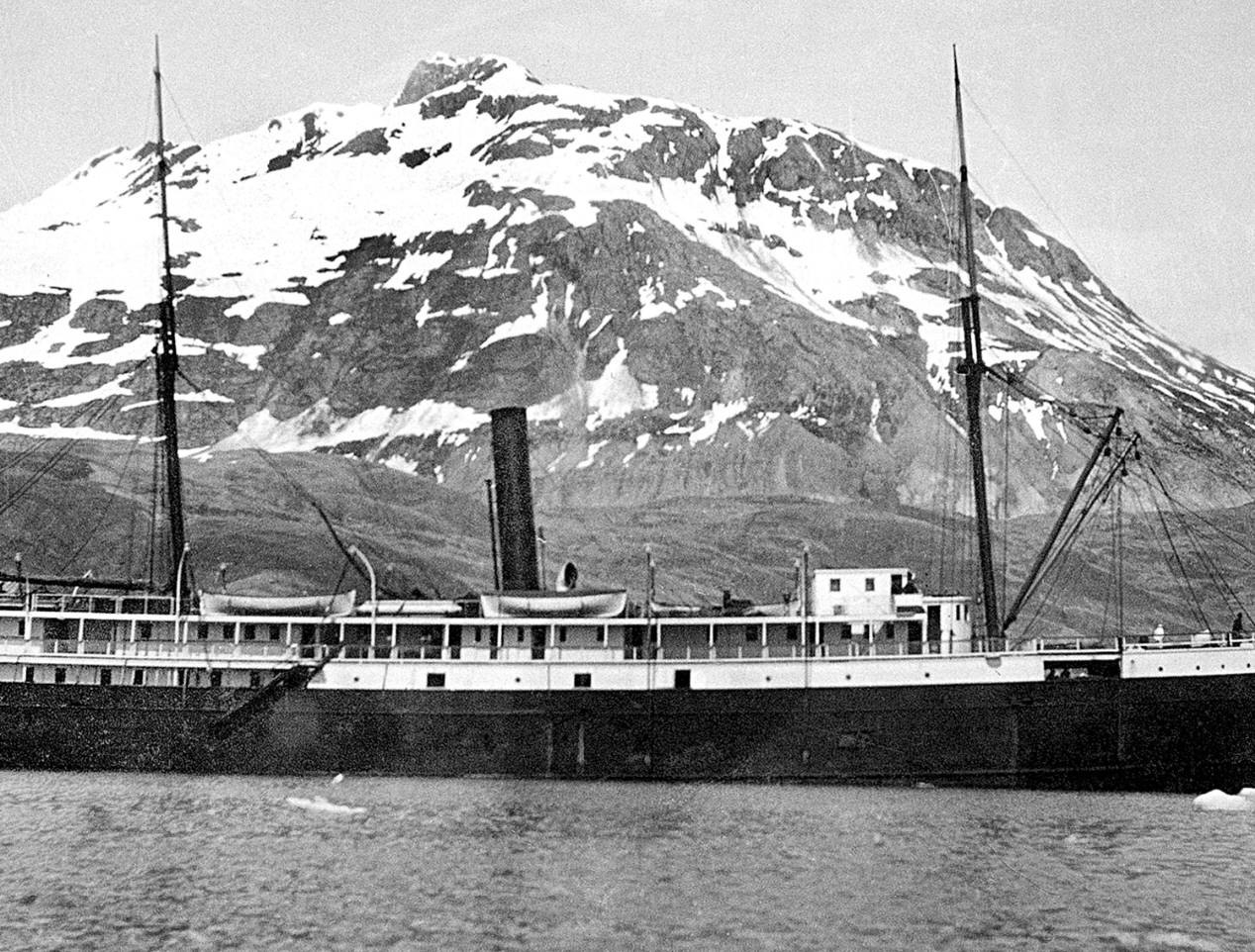
The expedition attracted intense international press attention. Newspapers emphasized that Harriman himself would accompany the voyage and share the hardships of the journey, a detail that helped present the undertaking as both a serious scientific enterprise and a dramatic demonstration of American exploration in the far North. At the same time, observers recognized that the expedition carried broader significance: it highlighted the growing strategic and economic interest of American railroad and industrial circles in Alaska and the northern Pacific—regions that would later appear prominently in early discussions of a transcontinental railway linking North America and Eurasia.
In one dramatic retelling, the expedition’s ship was already returning from Alaska when a sudden order was given: “Course west–northwest! To Chukotka!” In this version of events, Harriman aimed to include reconnaissance not only of Alaska (already U.S. territory), but also of Chukotka—that is, Russian territory across the Bering Strait. The ship did not ultimately reach the Siberian coast; a storm forced a change of course, and the battered vessel turned south again toward the United States.
Whether described as a scientific detour or an unrealized ambition, the episode captures a key theme of the era: Alaska was increasingly viewed not as an endpoint, but as a forward edge of American presence in the North Pacific—and the Russian Far East, just across the water, became part of that same strategic imagination.
Within this atmosphere of exploration and strategic curiosity about Alaska and the North Pacific, proposals for new transportation corridors began to circulate more actively in political and engineering circles. Among the individuals who attempted to transform these possibilities into a concrete international project was the French engineer and promoter Léon Loïcq de Lobel. In the first years of the twentieth century he advanced a bold vision of an intercontinental railway linking North America and Eurasia—a corridor that would extend from the rail systems of the United States and Canada through Alaska, cross the Bering Strait, and continue across Siberia toward the heart of Europe.
1902. Harry de Windt and the Early Paris–New York Railway Idea
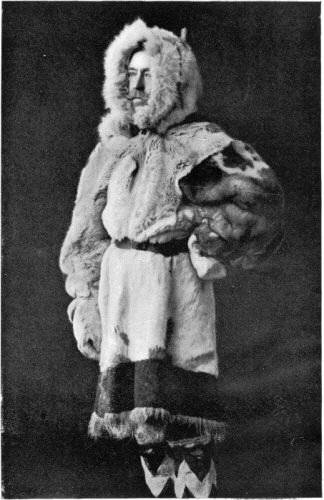
Harry de Windt
(1856–1933), British traveler, war correspondent, and author of accounts describing journeys across Siberia and the Russian Far East.
Source: InterBering Historical Archive
Another revealing strand in the early history of the Alaska–Siberia railway idea appears in the travels and publications of the British adventurer and writer
Harry de Windt.
Living in Paris at the turn of the twentieth century, de Windt moved in circles that included engineers, promoters, and financiers interested in grand transportation projects.
During the 1890s a group sometimes described in contemporary reporting as a “French syndicate” began circulating proposals for a railway connecting Europe and North America across Siberia and Alaska.
De Windt’s writings helped bring these discussions to a broad international audience.
De Windt belonged to a well–known nineteenth–century genre of travel writers who built careers describing hazardous journeys across remote regions of the globe. In 1904 he published the book
From Paris to New York by Land
,
recounting an eight–month expedition across Siberia, the Bering Strait region, Alaska, and the North American continent. According to his own explanation, the journey was undertaken partly to examine whether a transcontinental railway could realistically connect Paris and New York by land.
This is the language of “scientific travel” used as reconnaissance: exploration framed not only as geography, but as pre–investment due diligence—routes, resources, ports, and feasibility. The route he described roughly followed the emerging idea of an “All–World Railway” linking European and American rail networks through Siberia and Alaska.
De Windt rejected the notion of constructing a bridge across the Bering Strait.
The seasonal breakup of sea ice, he argued, would destroy even the strongest structure:
“They might as well talk of a line to the planet Mars,” he wrote, insisting that the mightiest bridge would not survive the movement of Arctic ice for long.
Yet he did not dismiss the larger concept of an intercontinental railway.
Like several Russian engineers of the period, he regarded a tunnel using the Diomede Islands as intermediate points as a far more practical solution.
Indeed, he speculated that such a tunnel might cost less than the subway systems then under construction beneath New York City.
In interviews given around 1902, de Windt predicted that the “All–World Railway” could be operating within a dozen years.
He imagined a single–track freight line with passing sidings that would allow a train to depart from Paris and arrive in New York about three weeks later.
In this vision, the railway had already passed the stage of fantasy and was becoming an engineering and political problem awaiting organization.
The publicity generated by de Windt’s travels brought the concept to high political circles.
After delivering a lecture in New York, he was invited to lunch at the White House by
Theodore Roosevelt.
During the meeting the president subjected the traveler to what de Windt later described as a “searching cross–examination.”
Roosevelt asked practical questions about the proposed railway that the adventurer could not easily answer:
what fuel would be available beyond the tree line, how temperatures of seventy–eight degrees below zero might affect iron rails, how many bridges would be required between the Trans–Siberian Railway and the Bering Strait, and what the depth of the strait was at its shallowest point.
When the questioning ended, Roosevelt reportedly asked with a faint smile whether his guest had actually travelled the entire distance he described.
De Windt later recalled that the president appeared to regard the entire railway scheme as either wildly premature or faintly comic.
Nevertheless, Roosevelt jokingly instructed him to reserve a first–class compartment—and preferably a seat in the dining car—on the first train that might someday depart from New York for France.
Although de Windt himself was not the architect of a formal railway concession, his writings played an important role in shaping public discussion of the idea.
They popularized the concept of a Eurasia–America railway and helped introduce European and American audiences to the strategic geography of the Bering Strait.
In the years immediately following these publications, more systematic efforts to organize financing and governmental support began to appear—most notably in the campaign of the French engineer and promoter
Léon Loïcq de Lobel, who attempted to transform such visions into a concrete international enterprise.
De Lobel Enters the Picture
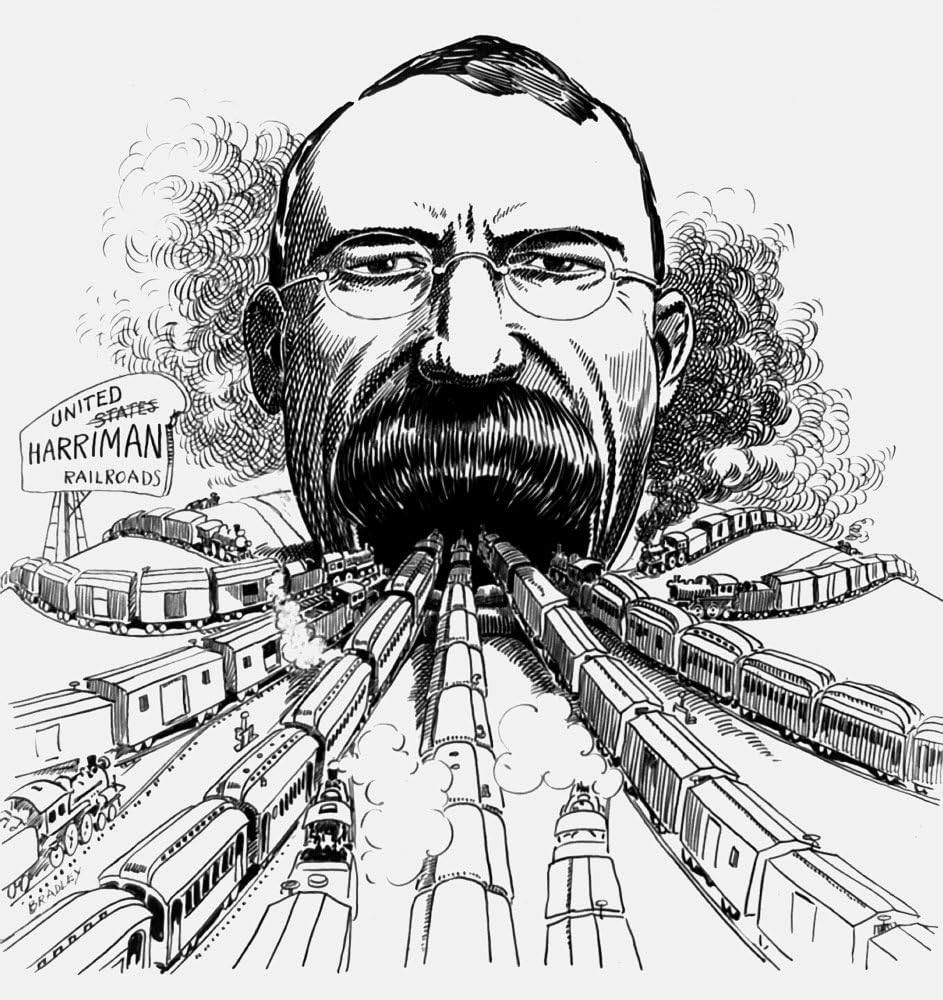
Edward Henry Harriman
(1848–1909), American railroad magnate, shown in a 1907 caricature as a giant Union Station swallowing railroads from across the country.
Source: InterBering Historical Archive
In this same pre-history of the scheme, de Lobel begins to appear more prominently. In early press portrayals he was introduced as a French “railway engineer” and even a “builder of railway tunnels,” a description that lent technical authority to his promotional role. After his northern travels, de Lobel was said to have studied the Alaskan coast and the Bering Strait region with an eye toward the feasibility of a fixed link. Returning to New York, he reportedly met with American railroad interests; soon afterward he publicized a sensational concept: a main line connecting Paris and New York, linked by a railway tunnel beneath the Bering Strait.
At this point the narrative returns naturally to Harriman. As the owner or controller of major U.S. rail systems, Harriman embodied the era’s belief that rail networks could be expanded, consolidated, and projected across oceans by means of strategic chokepoints. His continental lines reached the Pacific; the dream of extending that reach beyond the Pacific—to Asia, Siberia, and ultimately Europe—offered a dramatic conclusion to the logic of railroad empire.
Seen in this context, de Lobel’s later Bering Strait campaign did not arise in a vacuum. It emerged from a broader international moment when exploration, press publicity, financial ambition, and geopolitical imagination converged in the North Pacific—and when Alaska and Chukotka began to be discussed as adjoining pieces of a single, world-scale transport corridor.
↑ Back to top
◆ ◆ ◆
Part 5. Forming the Intercontinental Vision
At the beginning of the twentieth century, Léon Loïcq de Lobel began circulating a proposal that he described as a “World Intercontinental Railway.” The concept envisioned a continuous rail corridor linking New York and Paris through Canada, Alaska, the Bering Strait, Chukotka, Yakutsk, Irkutsk, and the existing Trans-Siberian Railway, which would then carry trains onward to Moscow and the capitals of Western Europe.
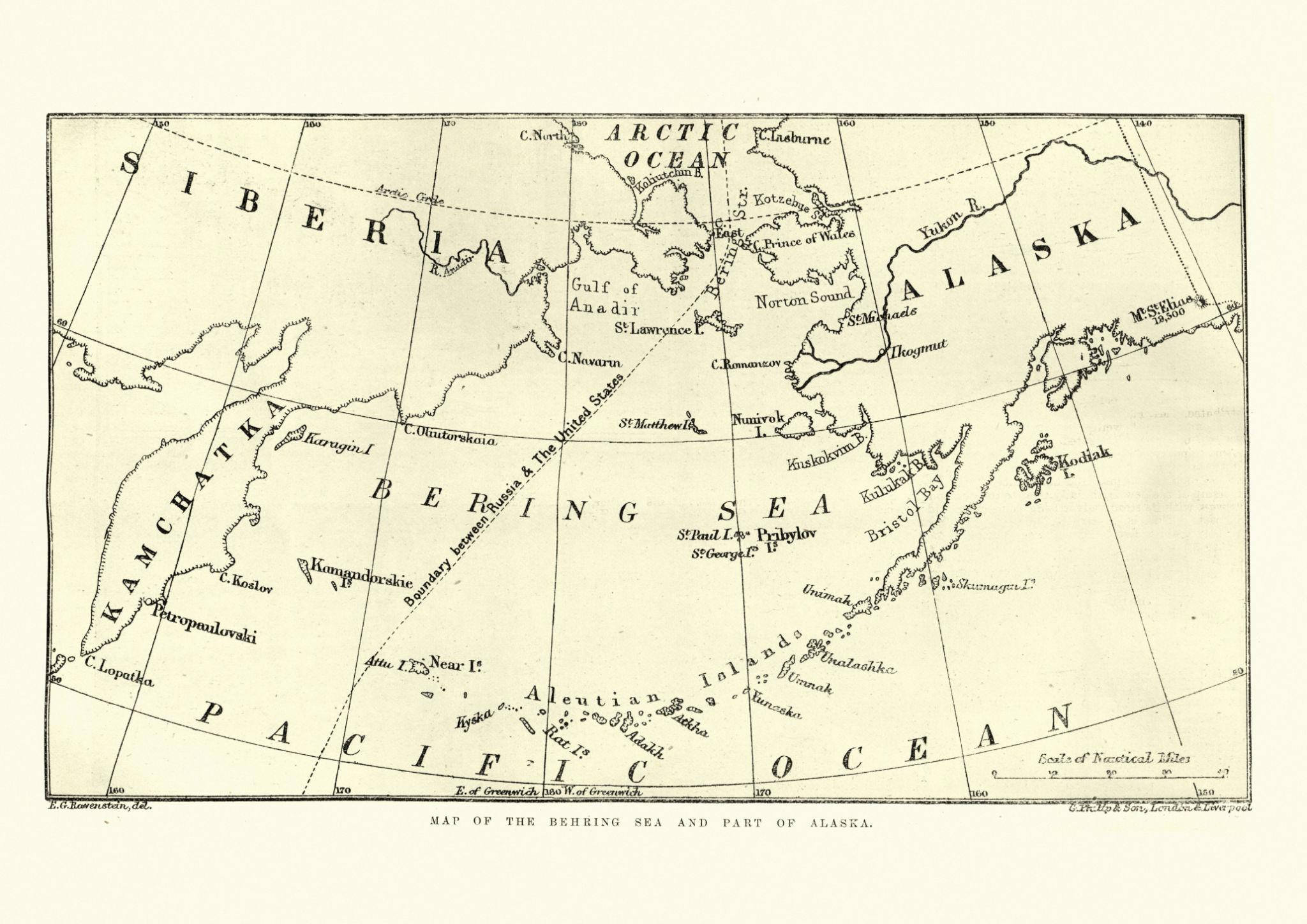
Historical map of the Bering Sea and Alaska region, 1891.
Source: InterBering Historical Archive
In engineering terms, the proposal was ambitious. Early descriptions of the project included an undersea connection across the Bering Strait of roughly 80–90 kilometers, two parallel railway tracks, and a bundle of communications and utility infrastructure. Some formulations even suggested accompanying telegraph cables, electric transmission lines, and pipelines linking the continents. De Lobel presented the scheme not simply as a shorter transport route between markets, but as a transformative system connecting the economies and societies of Eurasia and North America.
This broader framing is important for modern readers. Early promoters of large transportation projects often presented railways as instruments of civilizational change. Rail infrastructure was described not merely as steel and engineering, but as a catalyst for trade, migration, settlement, and cultural exchange—a mechanism that could, in their words, help fuse distant regions of the world into a single economic space. De Lobel’s rhetoric belonged clearly to this tradition of global infrastructure optimism.
At the same time, the project appeared within a geopolitical environment where major powers were competing for influence in the northern Pacific and the Russian Far East. American financiers and railroad magnates were exploring opportunities connected with Siberia’s vast natural resources, while Russian officials were wary of foreign concessions that might extend too deeply into imperial territory.
Some contemporary observers doubted whether the railway vision was ever meant to be realized exactly as described. Constructing thousands of kilometers of railway through the Arctic and subarctic landscapes of northeastern Siberia—across tundra, permafrost, and regions experiencing months of polar night and extreme winter temperatures—would have been extraordinarily difficult under the technological and economic conditions of the early twentieth century. For critics of the plan, the real objective of certain financial groups may have been less the construction of the railway itself than the acquisition of sweeping concessions that would grant access to land and mineral resources across northeastern Siberia.
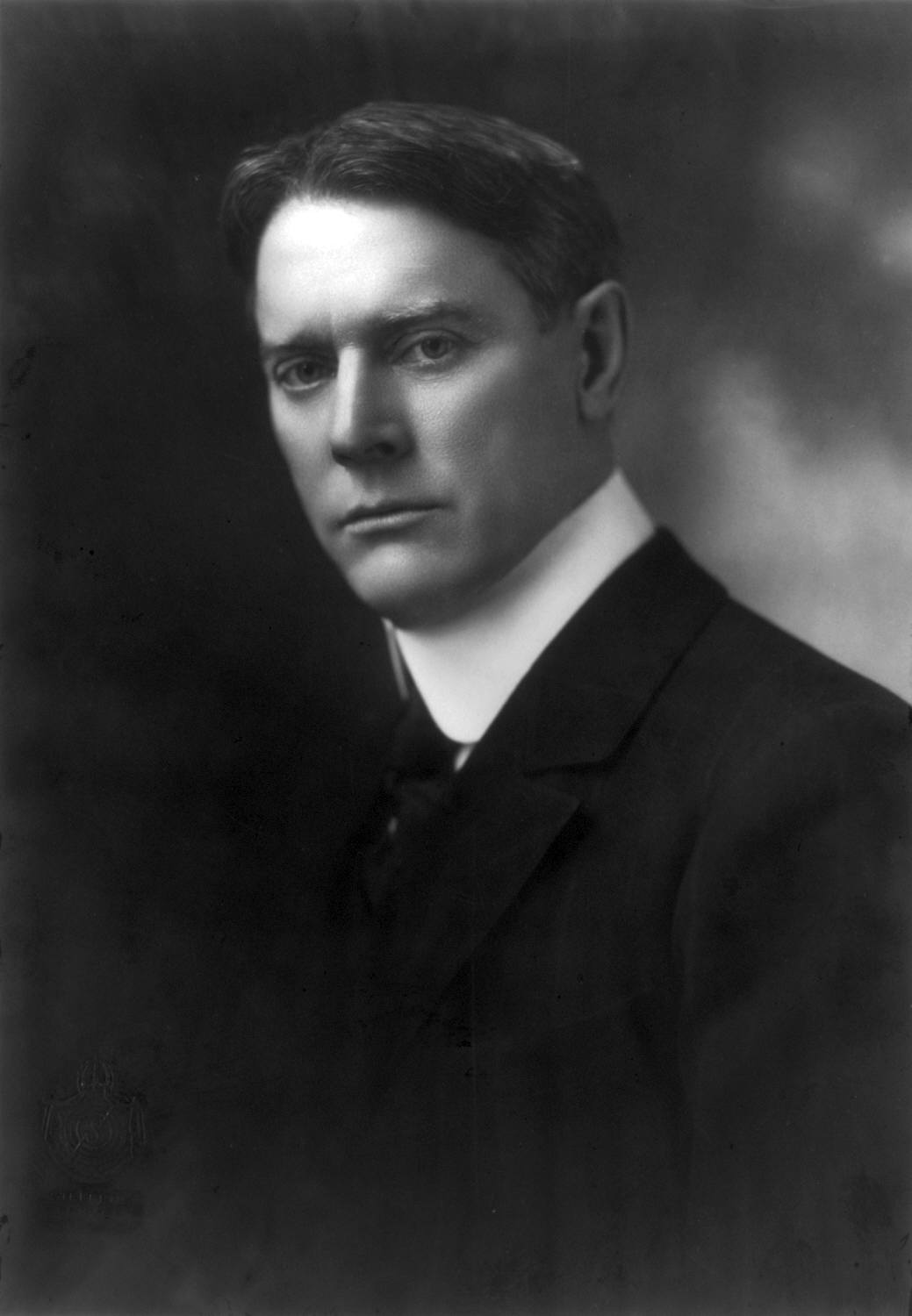
Albert Jeremiah Beveridge
(1862–1927), U.S. Senator from Indiana and influential advocate of American expansionism.
Source: InterBering Historical Archive
Political statements from the period illustrate the wider atmosphere of strategic competition. In 1901, while discussions of the proposed “Paris–New York Main Line” were circulating in European and American newspapers, St. Petersburg received visits from several prominent American political figures, including Senators Henry Cabot Lodge and Albert Beveridge. Shortly afterward, Beveridge expressed views in the American press reflecting the expansive outlook of the era. Writing in the Saturday Evening Post, he suggested that eastern Siberia could become a natural sphere of American commercial activity. In speeches before the U.S. Congress, Beveridge likewise described an international future in which American trade, law, and influence would spread across new regions of the world.
These debates formed the geopolitical background against which de Lobel’s proposal must be understood. The idea of an intercontinental railway across the Bering Strait stood at the intersection of engineering imagination, financial ambition, and the strategic concerns of competing states. It was within this complex environment that de Lobel attempted to advance his campaign for surveys, concessions, and international backing.
At the beginning of the 1900s, de Lobel circulated a proposal for a
“World Intercontinental Railway” linking New York and Paris
via Canada, Alaska, the Bering Strait, Chukotka,
Yakutsk, Irkutsk, and then the Trans-Siberian to Moscow
and onward into Western Europe.
The concept was bold in both engineering and systems terms. Contemporary descriptions include elements that appear remarkably modern: an undersea link of roughly 80–100 km depending on the route considered, a double–track or paired railway line, and associated infrastructure such as telegraph cables, power transmission lines, and even proposals for an oil pipeline connecting the continents. De Lobel framed the project not merely as a shorter route between markets, but as a world–scale integration of trade, culture, migration, and politics.
This is an important point for modern readers: early promoters often tried to sell fixed-link projects as
civilizational mechanisms. Rail was not only steel and stone; it was a proposed accelerator of
settlement, commerce, and the “fusion” of peoples. De Lobel’s rhetoric belonged to that tradition.
↑ Back to top
◆ ◆ ◆
Part 6. Lobbying Strategy: France, Russia, and the United States
Léon Loïcq de Lobel pursued the Bering Strait railway project as a carefully staged international campaign. The proposal could not succeed within the borders of a single nation. It required finance, political endorsement, and engineering cooperation across several countries. De Lobel therefore operated simultaneously in three arenas: France, Russia, and the United States, presenting the same project in different ways to different audiences.
France: Prestige, Finance, and a European Launching Pad
France offered the language and prestige of modern megaproject legitimacy. Paris had already witnessed an era of monumental engineering ventures and international concessions, and large infrastructure schemes were familiar to its financial and political elites. De Lobel therefore sought to anchor his project in French public life.
During the early 1900s Paris newspapers occasionally mentioned his proposal under the title Chemin de fer Paris–New York — the “Paris–New York Railway.” In this framing the project was presented as a symbol of technological triumph and international unity. De Lobel cultivated bankers, public figures, and members of the French elite, seeking what contemporary language called “high patronage.”
In Paris he organized public lectures, including a presentation at the Sorbonne devoted to the concept of a “Great Main Line” connecting the continents. He also published writings promoting the future Alaska–Siberia railway and assembled a syndicate that included bankers, former ministers, aristocrats, military officers, and other influential personalities. According to contemporary reports, the campaign even secured the symbolic patronage of French President Émile Loubet.
France thus served as an amplifier. By presenting the proposal within respected French institutions and circles of finance, de Lobel attempted to transform a speculative idea into a project that appeared internationally legitimate and worthy of diplomatic discussion.
Russia: The Decisive Corridor
Russia held the key to the entire undertaking. A Bering Strait crossing would have been meaningless without long approach lines through Siberia and Chukotka, and any such corridor required access to imperial territory, concessions for construction, and a legal framework for land use and security.
In 1903 de Lobel submitted a memorandum to the Russian Ministry of Finance and the Ministry of Ways of Communication titled Projet de jonction ferroviaire entre l’Empire russe et les États-Unis d’Amérique (“Project for a Railway Junction Between the Russian Empire and the United States of America”). The proposal suggested preliminary surveys in Chukotka and investigations of the Bering Strait seabed, financed by a Franco–Russian–American syndicate.
Diplomatic channels carried the proposal forward. According to contemporary accounts, the French ambassador transmitted the project to Russian authorities with cautious support, noting that it “deserved attention, though it might be premature.”
Reaction within Russia was divided. Some engineers believed that the technical challenges, though immense, were not entirely beyond the reach of modern engineering. Others within the government saw the matter differently. The Bering Strait region was strategically sensitive, and Russia was already committing enormous financial resources to the construction of the Trans-Siberian Railway and related projects. Granting foreign syndicates sweeping rights across Siberian territory appeared to many officials both financially risky and politically dangerous.
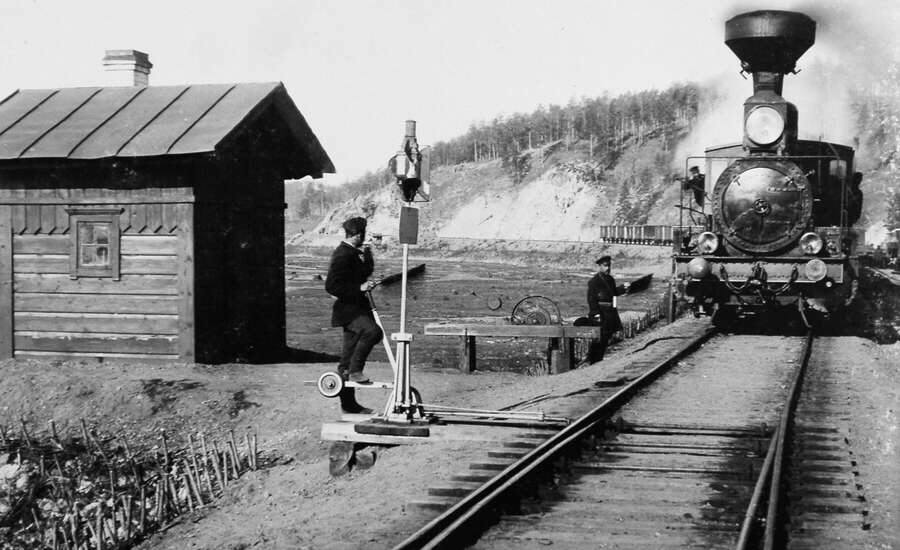
A station along the Trans–Siberian Railway in eastern Russia in the early twentieth century.
Completed gradually between 1891 and the early 1900s, the Trans–Siberian Railway became the backbone of Russia’s eastward transportation system and would have formed the western anchor of any future Alaska–Siberia rail connection.
Source: InterBering Historical Archive
The United States: Capital, Publicity, and Corporate Ambition
Across the Atlantic the proposal was framed in more commercial terms. In American cities the project appealed to financiers, railroad interests, and the press as a vision of economic expansion. A rail corridor linking North America to Asia and Europe promised access to new markets, natural resources, and the prestige of engineering conquest.
In New York a parallel syndicate was organized to represent American interests in the project. Its legal representatives reportedly included engineers associated with the major railroad systems of Edward Harriman and James J. Hill: James W. Armstrong, George H. Pegram, Henry Rohwer, E. L. Corthell, and J. A. L. Waddell. While the French campaign operated publicly, the American branch of the enterprise remained largely in the background during the early stages.
Renewed Efforts in St. Petersburg
The Russian government initially responded with refusals, doubting that de Lobel and his associates possessed sufficient capital to undertake such an immense project. After a third rejection in 1904, however, the situation shifted. Harriman reportedly authorized de Lobel to travel again to St. Petersburg with broader powers, this time acting explicitly on behalf of an American-backed syndicate sometimes referred to as the “Trans–Alaska–Siberia” company.
To strengthen his case, de Lobel brought with him a document signed by prominent American figures, including U.S. Secretary of the Treasury Leslie M. Shaw. The statement expressed support for the railway and declared that American financiers were prepared to assist in forming a company for its construction once the Russian emperor granted the necessary concession. Among the signatories were several influential bankers, including Alfred H. Curtis, director of the National Bank in New York.
In this international choreography de Lobel functioned as the indispensable intermediary. He spoke the languages of science, diplomacy, and promotion, translating the same corridor into different national interests: modernization for Russia, prestige and financial leadership for France, and commercial expansion for the United States.
↑ Back to top
◆ ◆ ◆
Part 7. The Proposed Concession: Terms of the Trans–Alaska–Siberia Railway
To strengthen his negotiations in St. Petersburg, Léon Loïcq de Lobel arrived with a draft of the concession terms prepared by Edward H. Harriman and his associates. The document outlined the conditions under which the proposed Trans–Alaska–Siberia syndicate would construct and operate a vast railway corridor across northeastern Siberia and beneath the Bering Strait.
The main provisions of this remarkable proposal included the following:
-
Construction of the main railway corridor.
The syndicate proposed to construct, at its own expense and on a concession basis, a railway beginning at Krasnoyarsk and extending eastward through Yakutsk, Verkhne-Kolymsk, and ultimately to Cape Dezhnev on the Bering Strait. The projected length of the line was approximately five thousand versts (more than 5,300 kilometers).
-
Bering Strait crossing.
From Cape Dezhnev the plan called for a submarine tunnel beneath the Bering Strait to the Diomede Islands. From the islands a second tunnel would continue to Cape Prince of Wales in Alaska, thereby linking the Eurasian and North American railway networks.
-
Concession corridor along the railway.
As compensation for construction expenses, the Russian government was asked to grant the syndicate, for a period of ninety years, not only the right-of-way required for railway tracks, stations, and telegraph lines, but also a territorial strip extending eight miles (about 12.8 km) on each side of the railway line.
-
Transfer of state rights over the concession territory.
Within this corridor the concessionaires requested the transfer of virtually all rights normally belonging to the state, including control over the land and its natural resources. The government was also asked to provide the syndicate with official maps, surveys, descriptions, and statistical information concerning the territory.
-
Economic rights across the concession zone.
The syndicate sought extensive privileges within the concession territory, including the right:
- to acquire additional lands for agriculture, settlements, and industrial activity;
- to construct auxiliary railways, canals, ports, docks, warehouses, and elevators;
- to establish tramways connecting stations with nearby settlements and mines;
- to operate transportation enterprises on rivers and coastal waters;
- to exploit mines, forests, quarries, and industrial plants;
- to generate and utilize electrical power and other forms of energy.
-
Fiscal privileges.
The proposed concession included exemptions from various taxes and customs duties for the syndicate and its operations within the concession territory.
-
Security forces.
The draft terms also granted the concessionaires the right to recruit and maintain their own armed guard for the protection of railway property and operations.
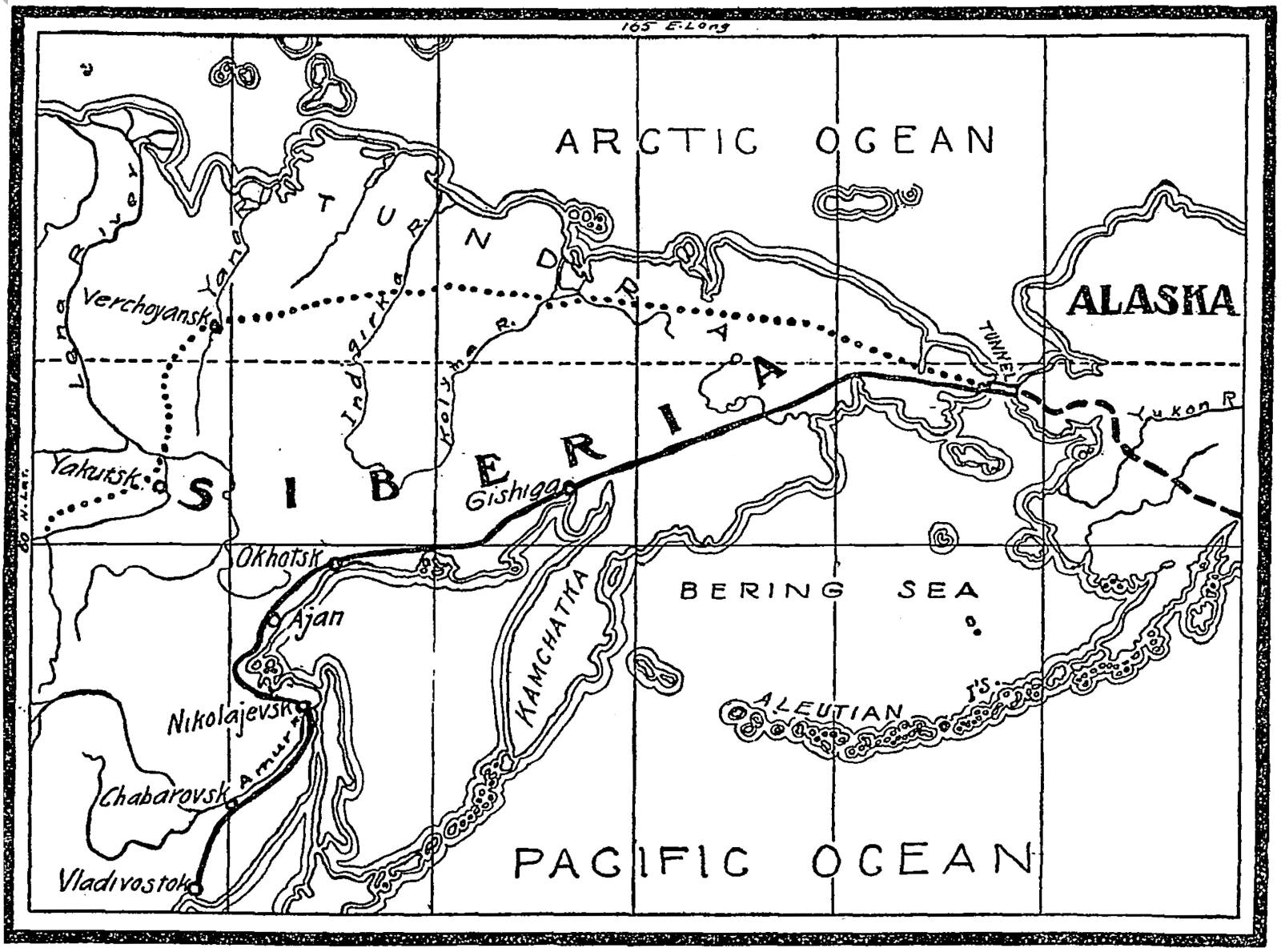
Proposed railway routes in Siberia toward the Bering Strait.
Source: InterBering Historical Archive
The full text of these proposed terms was later reproduced by S. V. Slavin in the collection Chronicle of the North. Taken together, the provisions illustrate the extraordinary scope of the concession sought by the syndicate. The requested corridor would have placed under private control a vast territory in eastern Siberia, estimated at roughly 120,000 square versts.
Yet even this scale did not mark the limit of the proposal. When de Lobel learned that the Russian government was considering construction of the Amur line of the Trans-Siberian Railway, he suggested that the syndicate could also undertake that project. In addition, numerous branch lines were envisioned from the proposed Krasnoyarsk–Cape Dezhnev trunk route—including connections toward Okhotsk, Chita, Blagoveshchensk, and Khabarovsk.
If realized, these additions would have expanded the scheme from a single 5,000-verst railway into a network approaching 10,000 versts. In practical terms, such arrangements would have brought under concession control not merely 120,000 but potentially 240,000 square versts of territory in northeastern Siberia.
For many Russian officials, the implications were unmistakable. What was presented as an infrastructure project increasingly resembled a proposal for large-scale foreign economic control over vast regions of the Russian Far East.
↑ Back to top
◆ ◆ ◆
Part 8. War, Revolution, and the Narrowing Window (1904–1906)
Events in the wider world soon began to reshape the political environment in which Léon Loïcq de Lobel was promoting his intercontinental railway scheme. The years 1904–1905 brought the shock of the Russo–Japanese War and a growing wave of unrest within the Russian Empire. In such circumstances the political calculus surrounding large international concessions changed rapidly.
De Lobel attempted to adapt his arguments to this new reality. Instead of presenting the Bering Strait railway primarily as a commercial enterprise, he increasingly emphasized its potential strategic value. A northern transcontinental route, he argued, could reduce Russia’s dependence on vulnerable maritime supply lines and might serve as a secure logistical corridor linking Eurasia and North America in an uncertain geopolitical future.
Yet timing proved decisive. War exposed administrative weaknesses, while domestic instability made new foreign-linked concessions politically sensitive. In periods of crisis, megaprojects are judged not only on engineering feasibility but also on political optics, sovereignty, and the fear of uncontrolled external influence.
The campaign reached a particularly dramatic phase during 1905 and 1906. Contemporary reports suggested that Russian authorities were willing to allow preliminary investigations connected with the Alaska–Siberia railway concept. For promoters such statements could be interpreted as a signal of progress, even when they represented only a tentative administrative opening rather than a full concession.
Nevertheless, skepticism appeared almost immediately. Technical journals could admire the audacity of the plan while questioning its feasibility. Political observers could recognize the vision while worrying about the precedent it might establish. The Bering Strait was not merely an engineering obstacle—it was also a frontier between empires, financial systems, and competing ideas of sovereignty.
In modern terms, the year 1906 appears as the peak of what might be called “narrative momentum.” There was enough official interest to generate headlines and encourage promoters, yet not enough institutional commitment to overcome the first serious obstacles: the terms of the proposed concession, security concerns in the Far East, and resistance within parts of the Russian administration.
De Lobel arrived in St. Petersburg in the autumn of 1905 hoping to advance the negotiations. At that moment, however, the imperial government was deeply alarmed by the upheavals of the First Russian Revolution. Any agreement with a powerful foreign syndicate risked becoming another argument for critics of the regime, already weakened by its policies in Korea and Manchuria and by the outcome of the war with Japan.
Prime Minister Sergei Witte, although not openly hostile to the proposal, showed little enthusiasm for immediate negotiations. Unable to secure a direct audience with Witte, Léon Loïcq de Lobel attempted to advance his project through other channels within the imperial establishment.
Through intermediaries, including the adventurer and entrepreneur V. Vonlyarlarsky—an individual associated with American commercial interests in Chukotka—de Lobel succeeded in attracting the attention of influential members of the imperial family. One of them was Grand Duke Nikolai Nikolaevich Romanov, who possessed considerable influence at court. Through another well-known figure, Baron Fredericks, Minister of the Imperial Court, the project also received favorable attention from the Empress.
Among the papers of Grand Duke Nikolai Nikolaevich the following note has been preserved, written in November 1905:
"I had an opportunity to speak about the "Siberia–Alaska" railway (obviously with the Tsar.). The idea was received with more than sympathy. I advise, in the most confidential manner, to warn [the interested parties] that there is an enormous chance of a commission being appointed, and that they should not leave.
November 25, 1905.
Nikolai."
("Имел возможность говорить про дорогу "Сибирь – Аляска". Отнеслись более чем сочувственно. Советую конфиденциальнейшим образом предупредить, что есть громадный шанс на назначение комиссии—и чтобы не уезжал.
25 ноября 1905 г.
Николай").
Following this exchange, a meeting concerning the proposal was held within the Russian Council of Ministers, at which the Grand Duke himself was present. As a result, a special commission was established at the Ministry of Railways under the chairmanship of Ziegler von Schaffhausen to examine the feasibility of the proposed Alaska–Siberia railway scheme—precisely the step that de Lobel had hoped to achieve.
For de Lobel, this represented the closest moment yet to official consideration of the project at the highest levels of the Russian state. Yet the commission also marked the beginning of the final stage of scrutiny—one that would soon confront the proposal with the realities of imperial policy, financial caution, and strategic concern.
↑ Back to top
◆ ◆ ◆
Part 9. The Peak of the Vision and the Wave of Skepticism (1906)
By the summer of 1906, Léon Loïcq de Lobel’s campaign reached what appeared to be its decisive breakthrough. Newspapers reported that Tsar Nicholas II had issued an authorization allowing a Franco–American syndicate represented by de Lobel to begin preliminary work connected with a Trans–Siberian–Alaska railway project that envisioned bridging and tunneling across the Bering Strait. The announcement created the impression that years of promotion, travel, and diplomatic maneuvering had finally produced official recognition at the highest level of the Russian Empire.
For any infrastructure promoter, such a moment feels like victory. It suggests that a bold vision has crossed the threshold from speculation into administrative reality. It also appeared to confirm that de Lobel’s international strategy—cultivating influence in France, Russia, and the United States simultaneously—could indeed mobilize the machinery of empire.
Yet authorization is not the same as realization. Megaprojects often receive encouraging signals at an early stage, only to encounter resistance once concrete details emerge. Questions of financing, territorial control, and long-term concessions can quickly transform enthusiasm into caution.
The proposed undertaking was immense. Plans circulated for the creation of a company capitalized at approximately $200 million, which would undertake the tunneling of the Bering Strait and construct roughly four thousand miles of railway linking Alaska with the existing Trans-Siberian system in central Siberia. Cost estimates varied widely, ranging from about $50 million to as high as $2 billion, depending on the assumptions used.
De Lobel and his associates nevertheless presented the project with confidence. They predicted that the new railway would transform global transportation and shift what they described as the world’s commercial axis from the Suez Canal toward the Bering Strait. De Lobel himself described the proposed line as “the greatest railroading feat that ever was,” promising travelers a direct continental journey in modern railway comfort: “No more seasickness, no more dangers of wrecked liners—a fast trip in palace cars with every convenience.”
At the same time, critics in the press responded with skepticism. It was widely known that American railroad magnate Edward H. Harriman had contemplated the idea of a round-the-world railway network, and there were persistent rumors that de Lobel’s initiative might be connected to Harriman’s broader ambitions. However, clear documentary proof of such direct involvement remained elusive.
Many observers doubted the feasibility of the entire undertaking. The journal Scientific American dismissed the proposal to tunnel beneath the Bering Strait as an “absurd and impossible” scheme. The New York Times argued in 1905 that such a project might perhaps become realistic by the middle of the twentieth century—“fifty years from now”—but that for the present moment it was about as practical as attempting to colonize the dark side of the moon.
Another article in the New York Times in 1906 observed with irony that “nearly everybody has laughed at the fantastic project of connecting New York with Paris by rail,” adding that only French and Russian circles appeared to treat the idea with seriousness. Among those Russians intrigued by the proposal was Tsar Nicholas II himself, who reportedly regarded the Bering Strait tunnel as a bold and visionary undertaking.
Yet within the Russian government there remained strong opposition. Many ministers feared that granting the sweeping concessions requested by the syndicate could lead to extensive foreign control over resources and territory in eastern Siberia. In this sense, the ambitious project stood at the intersection of engineering imagination and imperial politics—a place where even the most daring technological visions could falter when confronted with concerns of sovereignty and national security.
Thus the year 1906 marked both the high point of the campaign and the moment when its vulnerabilities became most visible. The dream of a railway linking Paris and New York through Siberia and Alaska had reached the threshold of official attention, yet it had also provoked the doubts that would ultimately prevent the project from advancing beyond the stage of promotion and preliminary discussion.
↑ Back to top
◆ ◆ ◆
Part 10. The End of the Campaign (1906–1907)
In the United States as well, Léon Loïcq de Lobel’s efforts failed to gain real traction. The American press devoted only limited attention to the proposal, and the federal government offered no official endorsement. The New York Times briefly mentioned the idea in early 1906, quoting de Lobel’s claim that “Russia is willing to build her part of the railway,” but the newspaper treated the statement with noticeable skepticism. American industrialists, still cautious after the financial turbulence of the 1890s, were reluctant to invest in what one editor described as a “romantic trans-polar venture.”
By 1906, the proposed trans-Bering railway company existed largely on paper. De Lobel’s personal resources were nearly exhausted, his appeals to ministries produced little practical progress, and the project increasingly belonged to the world of speculative journalism rather than concrete engineering. Yet his failure was not simply the failure of an eccentric dreamer. It revealed the limits of global integration at a moment when imperial politics still overshadowed technological idealism.
Within Russia, criticism of the proposal also intensified. Russian engineers and scholars published analyses arguing that the project was technically unrealistic under the conditions of the Far North and that it concealed a speculative attempt by foreign financiers to secure sweeping concessions across Siberian territory. Many Russian business leaders likewise expressed concern that, even if the railway were built, the principal economic benefits would flow abroad rather than to Russian industry.
The broader political climate further complicated the situation. The revolutionary upheavals of 1905 had shaken the foundations of the Russian Empire. At the very moment when armed clashes between workers and government troops were taking place in cities such as Moscow, the imperial administration found it increasingly difficult to justify new large-scale concessions to foreign syndicates.
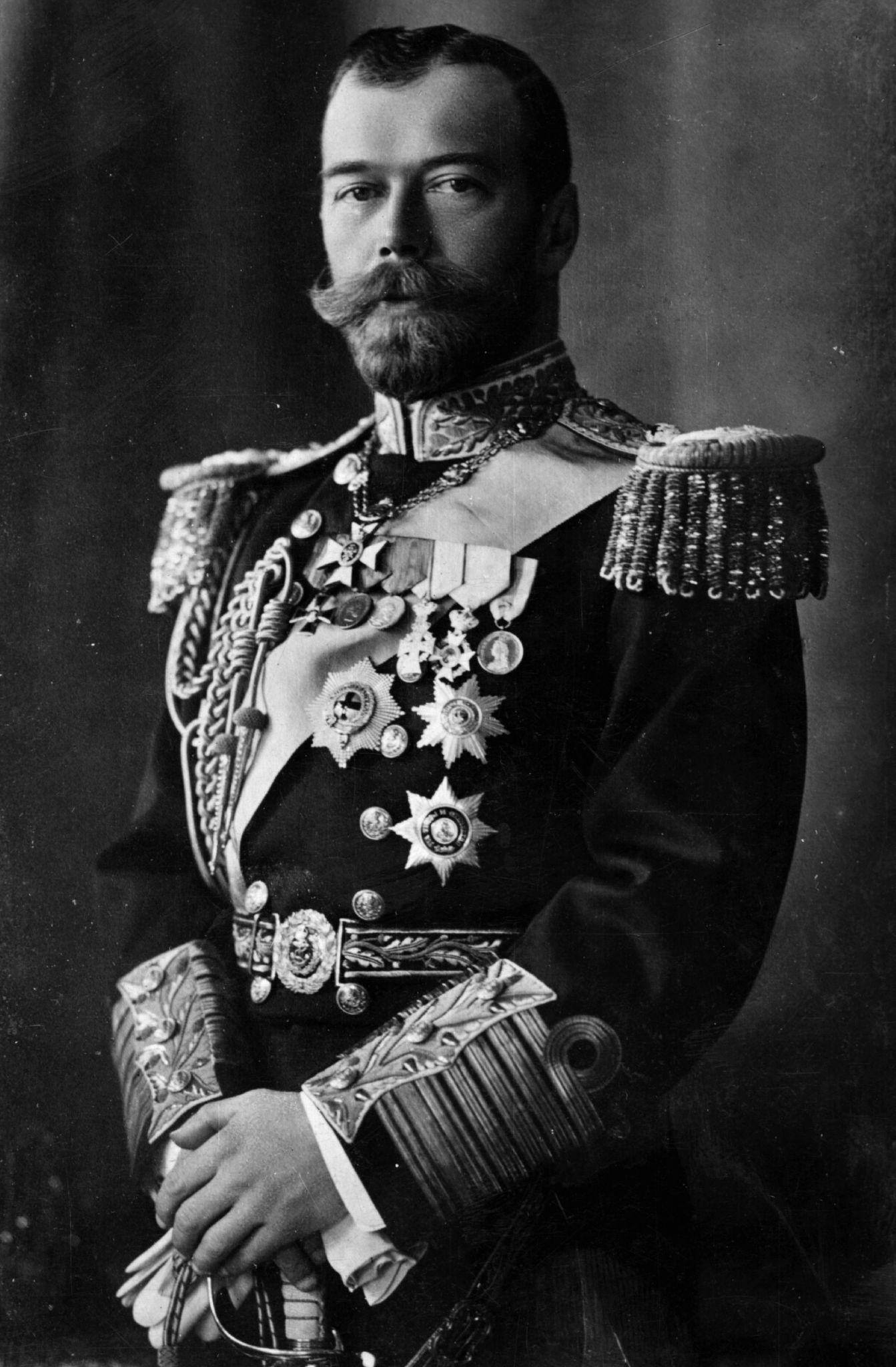
Tsar Nicholas II (1868–1918), Emperor of Russia.
Source: InterBering Historical Archive
Faced with these pressures, Russian ministries gradually adopted a strategy of delay. Negotiations were allowed to proceed slowly while officials avoided making binding commitments. In diplomatic circles it was widely understood that such delays could themselves become a tool of international bargaining.
At one point the project even appeared to regain momentum. Nicholas II, without waiting for the final conclusions of the government commission, allowed preliminary work on the railway project to begin as early as September 1906. For de Lobel this seemed to confirm that his persistent lobbying had finally produced a decisive breakthrough.
Yet six months later it became clear that the matter was still far from resolution. In March 1907 the Tsar unexpectedly rejected de Lobel’s proposal following advice from two of his ministers. Determined to keep the project alive, de Lobel appealed directly to Nicholas II, insisting that “there was no political danger in the permission that had been granted to us.”
Apparently he succeeded, at least temporarily, in persuading the monarch once again. On July 10 the Tsar gave a new approval—this time without consulting his ministers—and reportedly advised de Lobel to depart immediately for Siberia in order to begin work on the proposed railway.
De Lobel enthusiastically informed his associates in the United States of what he considered a triumph:
“Our triumph is proof that the Tsar (and the Imperial family) sees more clearly than his Ministers, and that he understands better what must be done to develop this rich Siberia.”
Message from Léon Loïcq de Lobel to his associates in the United States — 1907.
By October 1907 de Lobel and his team were already cutting timber and reportedly laid out approximately 150 kilometers of route north from Chita. For a brief moment it appeared that he had succeeded in convincing the authorities that integrating Eastern Siberia and its vast resources into a global economic network could serve what he described as a “peaceful union of interests.”
Yet the apparent success proved fragile—something not uncommon in highly centralized political systems. Administrative hesitation, ministerial opposition, and growing concerns about foreign control over Siberian territory soon reasserted themselves.
Ultimately, however, the imperial government chose caution. On March 20, 1907, the Russian Council of Ministers formally rejected the concession requested by de Lobel’s syndicate. Concerns about sovereignty, territorial control, and foreign influence proved stronger than the appeal of a spectacular international infrastructure project.
The fate of de Lobel’s transcontinental railway proposal illustrates the deep ambivalence with which Russia approached international cooperation at the dawn of the twentieth century. On one hand, the empire sought to participate in the technological transformations of the modern world and to attract foreign investment. On the other, it remained wary of economic dependence and the potential erosion of national sovereignty.
Professional journals of the period, including Zheleznodorozhnoe Delo (“Railway Affairs”) and Vestnik Finansov (“Financial Herald”), frequently portrayed the Bering Strait project as a possible instrument of foreign influence in the Russian Far East. Engineers warned that international investors might use infrastructure concessions as a gateway to control mineral resources and transport routes in Siberia. The image of foreign engineers drilling beneath Russian territory carried both a literal and symbolic meaning: technological cooperation intertwined with fears of political intrusion.
Thus the ambitious vision of a railway linking Paris and New York through Siberia and Alaska came to an end not through a single dramatic decision but through the accumulation of doubts, political caution, and competing national interests. The idea itself did not disappear—it would reappear repeatedly in later decades—but de Lobel’s campaign marked the first major attempt to transform the dream of a Bering Strait railway into a coordinated international project.
↑ Back to top
◆ ◆ ◆
Part 11. Legacy: What Modern Promoters Can Learn from De Lobel
Léon Loïcq de Lobel left no railway and no tunnel beneath the Bering Strait. His legacy instead lies in method—and in warning. His campaign represents one of the earliest attempts to transform the idea of an intercontinental railway between Eurasia and North America into a coordinated international project.
What He Did Right
-
He treated the project as international from the beginning.
A fixed link between continents cannot be built by a single country. De Lobel approached the proposal as a multinational enterprise, moving strategically between France, Russia, and the United States in search of political support, capital, and legitimacy.
-
He pursued practical institutional steps.
Travel expeditions, memoranda to ministries, proposals for surveys, the creation of syndicates, and attempts to secure formal authorization were not secondary details but central elements of his campaign. In this respect, de Lobel anticipated many of the methods later used by promoters of large infrastructure projects.
-
He framed the corridor as transformational.
De Lobel argued that railways could reshape global trade and even bring civilizations closer together. Such narratives—in which infrastructure becomes a catalyst for economic and cultural integration—continue to shape modern visions of transcontinental transportation corridors.
Why the Project Still Failed
-
The institutional design raised sovereignty concerns.
The proposed concession would have granted extensive rights over land, resources, and infrastructure across large parts of northeastern Siberia. Russian officials increasingly feared that the project could open the door to foreign economic dominance in strategically sensitive territory.
-
The timing proved unfavorable.
The Russo–Japanese War and the revolutionary crisis of 1905 created an atmosphere of political instability. In such conditions the government was reluctant to approve large concessions involving foreign capital and influence.
-
A decisive political refusal ended the campaign.
Once the Russian Council of Ministers rejected the concession in 1907, engineering optimism and promotional enthusiasm could not overcome the absence of political authorization.
The Deeper Debate Behind the Project
The controversy surrounding the Bering Strait railway also reflected a broader tension within Russia’s modernization. Since the era of Peter the Great, the Russian state had sought to import Western technology and expertise while preserving political autonomy. By the beginning of the twentieth century this balance had become increasingly difficult to maintain.
American industrial power—symbolized by railroads, skyscrapers, and mass production—represented both opportunity and threat. To some observers, the proposed railway linking Alaska and Siberia appeared as a gateway to modern development. To others, it seemed to signal the transformation of Russia from a largely self-sufficient empire into a peripheral component of a global economic system dominated by foreign capital.
The term “penetration” (proniknovenie), which appeared in several official memoranda, captured these anxieties. The word did not refer to military invasion but to economic and technological infiltration—credit, expertise, and influence entering national territory through international concessions. In the aftermath of the Russo–Japanese War and the 1905 Revolution, Russian officials were especially sensitive to the possibility that foreign investors might exploit the empire’s instability.
Supporters of the project offered a different interpretation. Some engineers and economists argued that cooperation with American capital could accelerate the development of Siberia, introduce advanced technologies, and create a new export corridor independent of traditional European trade routes. In their view, participation in global industrialization did not necessarily imply subordination.
Yet these arguments failed to convince more conservative elements within the imperial bureaucracy. For them, every proposal for “international partnership” carried the potential risk of foreign control over national resources and strategic infrastructure.
An Idea That Refused to Disappear
Although de Lobel’s campaign ended quietly after 1907, the idea itself did not vanish. Proposals for a fixed link across the Bering Strait resurfaced repeatedly throughout the twentieth century—during the interwar period, again during the Cold War, and later in the post-Soviet era. Each revival reflected the same tension between two powerful forces: the hope that infrastructure could unite continents, and the fear that such connections might compromise national sovereignty.
During the Second World War, when the United States and the Soviet Union became allies against Nazi Germany, some planners again considered the possibility of a Bering Strait tunnel as part of a future postwar transport system. After the construction of the Alaska Highway in 1942, there were even suggestions that road connections might one day extend across Alaska to Nome and perhaps eventually through a tunnel linking the hemispheres.
Technically, later analysts would argue that there were no insurmountable engineering barriers to such a project. Politically, however, the real limits lay in the relationships between nations. De Lobel’s campaign therefore remains an early and vivid case study of how megaprojects are promoted into existence—and how they can just as quickly be halted by the competing priorities of sovereignty, security, and geopolitics.
↑ Back to top
◆ ◆ ◆
Timeline (quick reference)
Timeline: Léon Loïcq de Lobel and the Bering Strait Railway Idea
- 1859 — Pierre Louis Victor Léon Loïcq de Lobel is born in Bastogne (today Belgium).
- 1898 — Travels to Alaska and the Klondike during the gold rush; meets northern entrepreneur John J. Healy.
- 1899 — Publishes Le Klondyke, l’Alaska, le Yukon et les Îles Aléoutiennes, describing the geography and economic potential of the far North.
- 1901–1903 — Circulates proposals for a “Paris–New York Railway” linking Europe and America via Siberia and Alaska.
- 1903 — Submits memorandum to Russian ministries proposing a railway junction between the Russian Empire and the United States.
- 1904–1905 — Campaign continues amid the Russo–Japanese War and the Russian Revolution.
- 1906 — Russian authorities consider preliminary work related to the Alaska–Siberia railway concept.
- March 20, 1907 — Russian Council of Ministers rejects the proposed concession.
- 1922 — Léon Loïcq de Lobel dies in Paris.
◆ ◆ ◆
Biographical Index of Figures Mentioned in This Article
-
Armstrong, James W. — American railroad engineer associated with the Harriman railway system; listed among the technical representatives of the proposed American syndicate supporting the Trans–Alaska–Siberia railway project.
-
Beveridge, Albert J. — United States Senator from Indiana (1899–1911); an advocate of American global expansion who spoke about the commercial potential of eastern Siberia.
-
Clanchamp-Bellegarde, Viscount — French aristocrat who traveled with Harry de Windt and American railway engineer George Harding during a Siberian journey discussed in period commentary about a potential rail extension toward the Bering Strait.
-
Corthell, Elmer L. — American civil engineer known for large infrastructure and port projects; associated with engineering discussions connected with the proposed transcontinental railway.
-
Curtis, Alfred H. — American banker and director of the National Bank in New York; named among U.S. financial figures associated with statements of support for the proposed Trans–Alaska–Siberia railway concession.
-
de Windt, Harry — British traveler and writer whose Siberian journey was cited in early twentieth-century discussions about whether a railway could be extended into northeastern Siberia toward the Bering Strait.
-
Fredericks, Baron Vladimir B. — Minister of the Imperial Court of Russia under Nicholas II; helped bring de Lobel’s proposal to the attention of the Empress.
-
Gilpin, William — American politician and first territorial governor of Colorado; author of “The Cosmopolitan Railway” (1890), an early vision of a global railway network linking continents.
-
Harding, George — American railway engineer who accompanied Harry de Windt (and Viscount Clanchamp-Bellegarde) on a journey across Siberia discussed in the context of surveying potential routes toward the Bering Strait.
-
Harriman, Edward H. — Influential American railroad magnate and financier who controlled major rail networks including the Union Pacific; associated with the concept of a round–the–world railway and with syndicate interests behind the Alaska–Siberia proposal.
-
Healy, John J. — Irish–American frontier trader and entrepreneur in Alaska and the Yukon; founder of the North American Transportation and Trading Company and travel companion of de Lobel during his Klondike visit.
-
Hill, James J. — American railroad builder known as the “Empire Builder,” founder of the Great Northern Railway and a major figure in North American railway expansion.
-
Lobel, Pierre Louis Victor Léon Loïcq de — French engineer, explorer, and infrastructure promoter (1859–1922) who organized one of the earliest campaigns to build a railway linking Eurasia and North America across the Bering Strait.
-
Lodge, Henry Cabot — United States Senator and influential figure in American foreign policy at the turn of the twentieth century; part of the political environment surrounding U.S. interest in Asia and Siberia.
-
Loubet, Émile — President of France (1899–1906); his administration coincided with the period when de Lobel promoted the “Paris–New York Railway” concept in French political and financial circles.
-
Morgan, J. P. — John Pierpont “J.P.” Morgan, powerful American financier and banker; frequently named in period and later accounts as part of the U.S. financial environment in which transcontinental railway schemes were discussed.
-
Nicholas II — Emperor of Russia (1894–1917); at times showed personal interest in the Alaska–Siberia railway proposal but ultimately supported the government’s decision not to grant the requested concession.
-
Nikolai Nikolaevich Romanov — Grand Duke of Russia and influential member of the imperial family; supported preliminary discussion of the “Siberia–Alaska” railway and advocated creation of a government commission to examine the project.
-
Pegram, George H. — American civil engineer and railroad specialist; listed among engineers associated with the American syndicate interested in the transcontinental railway proposal.
-
Roosevelt, Theodore — President of the United States (1901–1909); members of his administration were referenced in connection with expressions of support for the Trans–Alaska–Siberia concept.
-
Rohwer, Henry — Railroad engineer connected with American railway companies involved in technical planning discussions of the Alaska–Siberia railway concept.
-
Schiff, Jacob H. — Jacob Henry Schiff of Kuhn, Loeb & Co.; influential American banker named in accounts of the financial milieu surrounding U.S. interest in rail and resource opportunities tied to Siberia and the Far North.
-
Shaw, Leslie M. — United States Secretary of the Treasury (1902–1907); his name appeared among American officials expressing support for the concept of a Trans–Alaska–Siberia railway concession.
-
Vonlyarlyarsky, Vladimir Mikhailovich — Russian entrepreneur, adventurer, and intermediary connected with American commercial interests in Chukotka. Acting as a broker between foreign financiers and the Russian imperial court, he helped introduce Léon Loïcq de Lobel’s Alaska–Siberia railway proposal to Grand Duke Nikolai Nikolaevich Romanov.
-
Waddell, J. A. L. — Prominent American civil engineer and bridge designer; associated with engineering circles interested in the feasibility of large international railway projects.
-
Witte, Sergei Y. — Russian statesman and Prime Minister (1905–1906); architect of the Trans–Siberian Railway and a central figure in evaluating foreign infrastructure proposals in Russia.
-
Ziegler von Schaffhausen — Russian official of the Ministry of Railways who chaired the government commission created to examine the feasibility of the Alaska–Siberia railway scheme.
Editor’s Note: This article is part of the InterBering Historical Archive documenting early proposals to connect Eurasia and North America across the Bering Strait. It reconstructs the life and campaign of Léon Loïcq de Lobel using contemporary newspapers, engineering discussions, diplomatic correspondence, and later historical research.
Article author: Fyodor G. Soloview
President, InterBering, LLC — Anchorage, Alaska
Published 2026
Last updated: March 2026

