


John Arthur Lynch
Historical Figure at a Glance
| Name: | John Arthur Lynch |
| Also cited as: | John A. Lynch; Maj. John A. Lynch; Major John Arthur Lynch |
| Born: | ca. 1828, Dublin, Ireland |
| Died: | May 6, 1900, Washington, D.C. |
| Occupation: | Lawyer, Union Army officer, public advocate, transportation promoter |
| Residence: | Cincinnati, Ohio; later Washington, D.C. |
| Known for: | Atlantic and Great Western Canal; Marshall and Lafayette monument campaigns; early Alaska–Asia transportation proposals; 1886 Senate review of a route between the United States, Asiatic Russia, and Japan |
| Historical significance: | One of the earliest documented American advocates of transportation links between North America and Asia through Alaska whose proposals entered Congressional and governmental discussion. |
Contents
- Alaska Changes the Map (1867)
- The Russian-American Telegraph and the First Trans-Bering Vision
- From Dublin to Cincinnati
- Civil War Service and Sherman’s March to the Sea
- The Atlantic and Great Western Canal
- The Marshall and Lafayette Monument Campaigns
- The 1877 Vision of an Alaska–Asia Railway
- The 1880 Congressional Initiative
- The 1886 Senate Review and John Wesley Powell
- The 1899 Defense of Priority
- Family, Music, and Public Life
- Death and the 1907 Congressional Petition
- Lynch in the InterBering Chronology
- Conclusion
- Timeline
- Sources
John Arthur Lynch was an American lawyer, Civil War officer, public advocate, and one of the earliest known promoters of transportation links between North America and Asia through Alaska. Although largely forgotten today, Lynch spent decades advancing ambitious national projects ranging from canals and public monuments to international transportation corridors.
Born in Dublin, Ireland, around 1828, Lynch was the son of Charles Lawler Lynch, a noted member of the Dublin bar. After emigrating to the United States, he established a successful legal career in Cincinnati, Ohio, where he practiced law for approximately twenty years. During this period he served as chief clerk and notary public in the law office of Rutherford B. Hayes, who later became the nineteenth President of the United States. Lynch subsequently became a partner in the Cincinnati law firm of Corwine, Lynch & Walker.
At the outbreak of the American Civil War, Lynch voluntarily left his legal practice and entered military service. Contemporary accounts state that he received his commission from President Abraham Lincoln, served with distinction during the war, and later participated in General William Tecumseh Sherman’s famous March to the Sea. In public memory he became widely known as Major John A. Lynch.
Following the war, Lynch devoted much of his energy to public projects and national infrastructure proposals. He promoted the Atlantic and Great Western Canal, advocated the erection of national monuments honoring Chief Justice John Marshall and the Marquis de Lafayette, and appeared before Congressional committees in support of legislation he helped draft. By the late nineteenth century, he had turned his attention toward an even larger vision: transportation connections linking the Americas with Asia across the northern Pacific region.
Part 1. Alaska Changes the Map (1867)
The modern history of proposals to connect North America and Asia across the Bering Strait began with a geopolitical event that, at first glance, had nothing to do with railways or tunnels.
On March 30, 1867, the United States and the Russian Empire signed the Treaty of Cession by which Russia agreed to transfer Alaska to the United States for $7.2 million. The treaty was ratified by the United States Senate on April 9, 1867, and the formal transfer took place at Sitka on October 18 of the same year.
The acquisition instantly transformed America’s geographic position. For the first time, the United States possessed territory extending to the edge of the Asian continent. The distance between Alaska and Siberia was no longer a matter of foreign geography; it had become a question involving American territory and American strategic interests.
The purchase encouraged new ways of thinking about transportation and communications. Some visionaries began to view Alaska not as a remote frontier but as a potential gateway to Asia. Many American promoters assumed that future transportation and communications projects could obtain access to Russian territory, an assumption that would later prove far more complicated than expected.
Among the first practical efforts to create a transcontinental connection between North America and Asia was an international telegraph project that sought to link the continents through Alaska, the Bering Strait region, and Siberia.
Part 2. The Russian-American Telegraph and the First Trans-Bering Vision
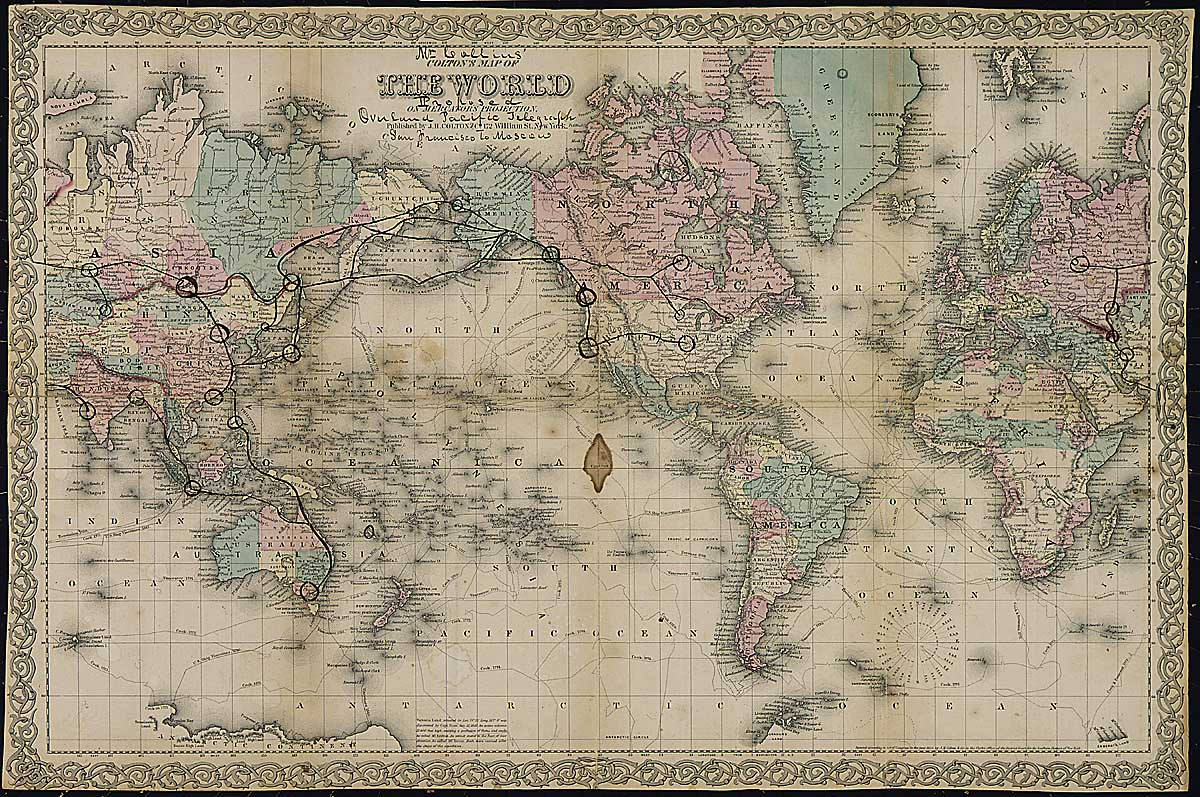
The first serious attempt to create a permanent communications link between North America and Asia did not involve railways. It involved the telegraph.
During the early 1860s, two competing approaches emerged for establishing rapid communications between the United States and Europe. One group of investors sought to lay a telegraph cable across the floor of the Atlantic Ocean. Another proposed a vast overland route that would connect North America and Europe through British North America, Russian America (Alaska), the Bering Strait region, Siberia, and the Russian Empire.
The leading advocate of this northern route was Perry McDonough Collins, an American entrepreneur who had spent years promoting closer commercial and communications ties between the United States and Russia. His efforts attracted the attention of the Western Union Telegraph Company and its president, Hiram Sibley. In 1864, Western Union organized the Western Union Extension Telegraph Company, commonly known as the Collins Overland Telegraph project.
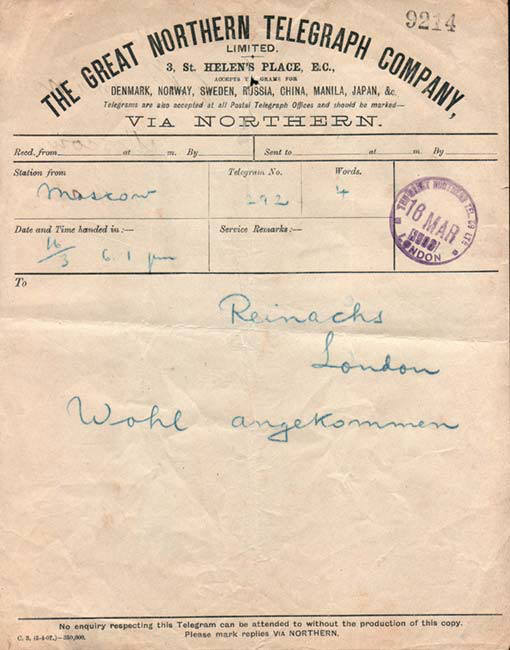
The proposed route was extraordinary in scale. Telegraph lines would extend northward through British Columbia and Alaska, cross the Bering Strait region, continue across Siberia, and ultimately connect with existing European telegraph networks. If completed, it would have created the first direct communications corridor linking North America and Eurasia across the northern Pacific region.
For several years, exploration and construction activities progressed on both sides of the Pacific. Surveying expeditions were dispatched to Alaska, Siberia, and the Russian Far East. Engineers, scientists, and explorers mapped large areas that had previously been little known to Americans. The project generated valuable geographic knowledge and helped focus public attention on the possibility of a northern route between the continents.
Unlike many later railway proposals, the telegraph enterprise benefited from a substantial degree of cooperation between American promoters and Russian authorities. Collins had cultivated relationships within the Russian Empire, and surveying activities were permitted in both Russian America and Siberia. Although the project never advanced to the point of constructing a complete transcontinental communications line, it demonstrated that large-scale international infrastructure initiatives could, under favorable political circumstances, obtain access to Russian territory.
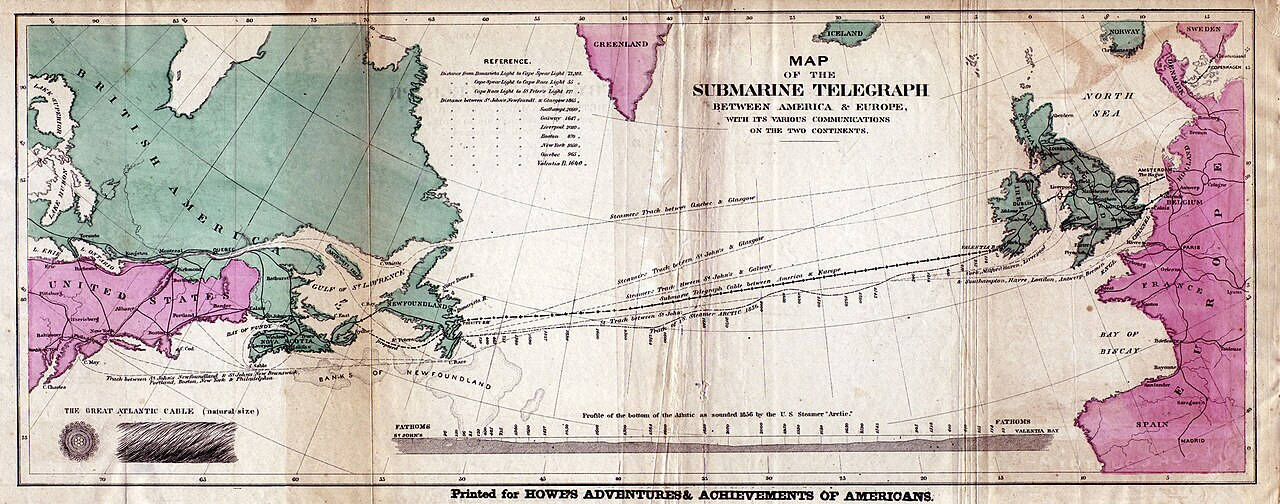
The enterprise came to an abrupt end in 1866. That year, the Atlantic Telegraph Company, led by Cyrus West Field, succeeded in completing a durable transatlantic telegraph cable across the Atlantic Ocean. The massive steamship Great Eastern played the decisive role in laying the cable. The success of the Atlantic route immediately rendered the much longer overland system economically unnecessary. Construction was halted, and the Russian-American Telegraph project was abandoned.
Yet the project’s historical significance extended far beyond its commercial failure. The surveys, maps, and reports produced by the enterprise revealed the geographic reality of a northern corridor connecting North America and Asia. The telegraph line itself was never completed, but the idea of linking the continents through Alaska and Siberia had entered the public imagination.
The experience also highlighted a question that would reappear repeatedly in the history of Bering Strait transportation proposals. While the telegraph project benefited from Russian cooperation, later railway promoters often discovered that obtaining permission to build transportation corridors across Russian territory was far more difficult. This issue would become one of the central political challenges facing many subsequent proposals for railways, bridges, and tunnels connecting North America and Asia.
In the decades that followed, visionaries would revisit the same corridor with increasingly ambitious plans. Among the earliest advocates of this new generation of ideas was John Arthur Lynch.
Part 3. From Dublin to Cincinnati
John Arthur Lynch was born in Dublin, Ireland, around 1828. Contemporary accounts describe his father, Charles Lawler Lynch, as a distinguished member of the Dublin bar. The family also claimed connections to several notable historical figures, including Thomas Lynch of South Carolina, a signer of the Declaration of Independence, and Major Daniel Houghton, the African explorer, who was said to be related through Lynch’s mother’s family.
At some point during the mid-nineteenth century, Lynch emigrated to the United States and settled in Cincinnati, Ohio, one of the nation’s most important commercial and transportation centers. Situated on the Ohio River and closely connected to the expanding railway network of the American Midwest, Cincinnati was a city where questions of commerce, transportation, and national development were part of everyday public life.
Lynch established a successful legal career and practiced law in Cincinnati for approximately twenty years. During this period he served as chief clerk and notary public in the law office of Rutherford B. Hayes, who would later become the nineteenth President of the United States. He subsequently became a partner in the law firm of Corwine, Lynch & Walker.
These experiences helped shape the interests that would later define much of Lynch’s public life. Long before he became associated with proposals involving Alaska and Asia, he had developed a lasting interest in large-scale infrastructure projects and the role of transportation in national development.
Part 4. Civil War Service and Sherman’s March to the Sea
When the American Civil War began in 1861, John Arthur Lynch left behind a successful legal career and entered military service. According to contemporary newspaper accounts, he received his commission directly from President Abraham Lincoln and joined the Union Army as an officer.
Lynch served throughout the four years of the conflict. During the war he was assigned to quartermaster duties and participated in some of the largest military operations undertaken by Union forces. His service brought him into contact with the logistical challenges of moving armies, supplies, and equipment across vast distances.
One of the most notable episodes of his military career was his participation in General William Tecumseh Sherman’s famous March to the Sea. Conducted between November and December 1864, the campaign carried Union forces from Atlanta to Savannah and became one of the defining operations of the war. Contemporary accounts published after Lynch’s death specifically noted his association with this campaign.
By the conclusion of the conflict, Lynch had earned a reputation as a capable officer and public servant. In later years he was widely known as Major John A. Lynch, a title that regularly appeared in newspaper articles, public documents, and memorial notices.
Part 5. The Atlantic and Great Western Canal
Following the Civil War, Lynch became involved in one of the most ambitious transportation proposals of the nineteenth century: the Atlantic and Great Western Canal.
The project sought to revive and expand commercial connections between the Atlantic coast and the interior river systems of the United States. Its promoters envisioned a waterway network that would connect the ports of Savannah, Brunswick, and Mobile with the Tennessee, Ohio, and Mississippi Rivers, creating a new transportation corridor between the southeastern seaboard and the nation’s inland waterways.
Lynch became one of the project’s most active supporters. According to contemporary accounts, he prepared and published a detailed pamphlet explaining the canal’s route, purpose, and economic advantages. He distributed copies at his own expense in an effort to build public and political support for the undertaking.
The project received favorable attention from a number of public officials. Governor Edward Follansbee Noyes of Ohio reportedly presented the proposal to the Ohio legislature as a project that could bring substantial benefits to the state and to interstate commerce.
Although the canal was never constructed, Lynch’s involvement is significant because it reveals the continuity of his interests. Long before he promoted transportation links between North America and Asia, he was already advocating large-scale infrastructure projects designed to connect distant regions through improved transportation corridors.
Part 6. The Marshall and Lafayette Monument Campaigns
During the 1870s and 1880s, Lynch devoted considerable effort to public projects intended to honor individuals whom he believed had made lasting contributions to the United States. Among his most successful initiatives were campaigns supporting monuments to Chief Justice John Marshall and the Marquis de Lafayette.
Lynch regarded Marshall as one of the principal architects of the American constitutional system. Seeking to commemorate the distinguished jurist, he drafted legislation providing for the erection of a monument in Marshall’s honor. According to contemporary accounts, the bill was introduced in the United States Senate by Senator David Davis of Illinois on December 10, 1879.
An even more prominent undertaking involved the erection of a monument to the Marquis de Lafayette in Washington, D.C. Lynch admired Lafayette’s service during the American Revolution and believed that the French general deserved a permanent national memorial in the capital of the United States.
To advance the project, Lynch drafted legislation appropriating $50,000 for the construction of a monument. According to a detailed letter published in 1900 by his daughter, Bessie Josephine Lynch, Senator John Sherman introduced the proposal in the Senate and invited Major Lynch to appear before the Joint Committee on the Library to present arguments in its favor.
Senator Sherman subsequently attached the measure to a general appropriations bill, and the legislation became law on March 3, 1885. A competition was held to select the monument’s design, and the commission was awarded to the French sculptors Alexandre Falguière and Antonin Mercié. The completed monument was constructed in Paris, shipped to the United States, and erected in Washington, where it was completed in 1891.
These monument campaigns reveal an important aspect of Lynch’s career. He drafted legislation, worked directly with senators, appeared before Congressional committees, and helped transform proposals into completed public projects.
Part 7. The 1877 Vision of an Alaska–Asia Railway
By the late 1870s, Lynch’s attention had expanded beyond domestic transportation projects. The completion of the first transcontinental railroad in the United States in 1869 had demonstrated that vast engineering obstacles could be overcome when supported by national determination and investment.
At the same time, the acquisition of Alaska and the earlier surveys conducted for the Russian-American Telegraph project had revealed the geographic possibility of a northern route connecting North America and Asia. Lynch began to consider how future transportation systems might extend beyond the American continent itself.
In a letter published by The Washington Post in 1899, Lynch recalled that on January 19, 1877, the Cincinnati Commercial had published an article in which he advocated transportation routes extending through Oregon, Washington Territory, British Columbia, Alaska, and Kamchatka toward Japan, China, the East Indies, and Europe.
Although the original newspaper article has not yet been located, Lynch’s detailed description of its contents provides one of the earliest known references to an American transportation vision extending across Alaska toward Asia. The proposal appeared more than a decade before William Gilpin published The Cosmopolitan Railway and many years before later bridge and tunnel schemes emerged.
Lynch’s concept was not limited to a single railway line. It reflected a broader vision of international transportation and commercial exchange linking multiple continents through a northern corridor. In this respect, his ideas anticipated themes that would reappear repeatedly in later proposals for a Bering Strait connection.
Part 8. The 1880 Congressional Initiative
Lynch’s transportation vision did not remain confined to newspaper articles and public discussion. By 1880, he had begun seeking formal consideration of his ideas within the federal government.
According to Lynch’s own account, Senator David Davis of Illinois introduced legislation on January 21, 1880, that reflected proposals Lynch had been advocating during the preceding years. The measure addressed questions of international transportation and commercial cooperation involving the nations of the Western Hemisphere and beyond.
The proposal represented an important step forward. Ideas that had previously existed only in articles, pamphlets, and public discussions were entering the legislative record of the United States Congress. Nearly two decades later, Lynch would point to this legislation as evidence that he had played an early role in promoting concepts that eventually contributed to the International American Conference and later discussions concerning an Intercontinental Railway.
During the years that followed, Lynch continued promoting the proposal through petitions, correspondence, and appeals to federal officials. By the mid-1880s his efforts had attracted sufficient attention to bring the matter before the United States Senate once again.
Part 9. The 1886 Senate Review and John Wesley Powell
The most important surviving event in Lynch’s Alaska–Asia campaign occurred in 1886.
By that time, Lynch had spent years promoting transportation concepts linking the United States with Asia through Alaska. His efforts culminated in a formal petition to the United States Senate seeking consideration of improved transportation and commercial connections between North America and Asia.
In response to Lynch’s petition, a bill was introduced in the United States Senate in 1886 to “open an overland and commercial route between the United States, Asiatic Russia and Japan.” The proposal represented one of the earliest known attempts to bring the concept of a northern transcontinental transportation corridor into the federal legislative process.
The chairman of the Senate Committee on Foreign Relations referred the measure to the Department of the Interior for review. In turn, the department requested an evaluation from John Wesley Powell, Director of the United States Geological Survey and one of the nation’s most respected explorers and scientific administrators.

Powell concluded that the proposed railway would present no greater obstacles than those already overcome in transcontinental railroad construction. Although he stopped short of endorsing the project itself, his opinion placed the concept within the realm of technical feasibility rather than fantasy.
The Senate ultimately took no action on the proposal. The federal government did not commit resources to survey or map a railway route toward Alaska comparable to the surveys that had preceded the transcontinental railroads of the American West.
Nevertheless, the 1886 episode remains historically important. It demonstrates that Lynch’s transportation vision progressed beyond newspaper articles and private advocacy and entered the formal legislative and administrative channels of the United States government. For the first time, a proposal associated with a future transportation corridor toward Asia received official federal consideration.
Part 10. The 1899 Defense of Priority
By the end of the nineteenth century, public discussion of international transportation systems had expanded considerably. New proposals for intercontinental railways were appearing in books, newspapers, and engineering journals. As interest in these projects increased, questions of priority and authorship also emerged.
In April 1899, The Washington Post published a letter by John Arthur Lynch responding to claims made by Hinton Rowan Helper, a nationally known author, political activist, and advocate of large-scale transportation projects. Helper had become famous decades earlier through his controversial writings on slavery and economic development and remained a prominent public figure at the close of the nineteenth century.
Lynch disputed Helper’s claim to priority in promoting an Intercontinental Railway and argued that he had advanced similar concepts many years earlier.
Prior to the introduction of my bill I published an article in the Cincinnati Commercial of January 19, 1877...
Lynch explained that the article advocated transportation routes extending through Oregon, Washington Territory, British Columbia, Alaska, and Kamchatka toward Japan, China, the East Indies, and Europe.
Whether or not Lynch was the sole originator of these concepts is difficult to determine today. Similar ideas were being discussed by a number of writers, engineers, and public figures during the late nineteenth century. Nevertheless, the importance of Lynch’s statement lies in the fact that it came from the man himself. The article provides direct evidence that he regarded his transportation proposals as part of a long-standing effort dating back at least to the 1870s.
For historians of Bering Strait transportation concepts, the 1899 article occupies a special place. It links the early proposals of the 1870s with the larger international transportation visions that would emerge during the closing years of the nineteenth century and the beginning of the twentieth.
Part 11. Family, Music, and Public Life
Behind Lynch’s public activities stood a family that remained active in Washington’s social and cultural life for many years.
Lynch was married to Marie Louise O’Brien, who died in Washington in October 1891. Contemporary newspaper accounts described her as a woman of gentle character and noted that she left two sons and three daughters. Earlier records reveal that the couple’s eldest son, John Joseph Lynch, died in 1889, indicating that the family had at least six known children.
Surviving records identify at least seven children of John Arthur Lynch:
• John Joseph Lynch
• George W. Lynch
• Vincent Eugene Lynch
• Maria Louise Lynch
• Bessie Josephine Lynch
• Anna Rosalia Lynch
• Catherine Annie Lynch
A Washington obituary notice published in 1914 identified Maria Louise Lynch as the eldest daughter of Major John Arthur Lynch, helping to clarify the composition and hierarchy of the Lynch family.
Several members of the family achieved distinction in their own fields.
Among the best known were Bessie Josephine Lynch and Anna Rosalia Lynch, both accomplished vocalists. According to contemporary newspaper reports, the sisters performed at the White House upon the special invitation of Lucy Webb Hayes, wife of President Rutherford B. Hayes. Their appearance reflected the long-standing relationship between the Lynch family and the Hayes family that had originated during John Arthur Lynch’s legal career in Cincinnati.
Anna Rosalia Lynch later gained recognition as a singer, composer, and music teacher. Her obituary, published in 1928, recalled her musical achievements and identified her as the daughter of John Arthur Lynch, lawyer and Union Army officer. Another son, Vincent Eugene Lynch, became an educator and was later associated with the United States College of Veterinary Medicine.
Bessie Josephine Lynch played a particularly important role in preserving her father’s public legacy. Through newspaper articles, public correspondence, and later petitions to Congress, she sought to ensure that his contributions to national projects would not be forgotten.
Part 12. Death and the 1907 Congressional Petition
John Arthur Lynch died on May 6, 1900, at his residence at 2611 Messmore Avenue in Washington Heights, Washington, D.C. Funeral services were held at the Church of the Sacred Heart in Mount Pleasant. Newspaper notices requested that Cincinnati newspapers publish the news, a reminder of the city where he had spent much of his professional life.
Only two months after his death, Bessie Josephine Lynch publicly defended one of her father’s accomplishments in a letter to The Baltimore Sun concerning the Lafayette Monument in Washington. The letter provided detailed information about Major Lynch’s role in drafting legislation, appearing before Congressional committees, and helping secure federal support for the project.
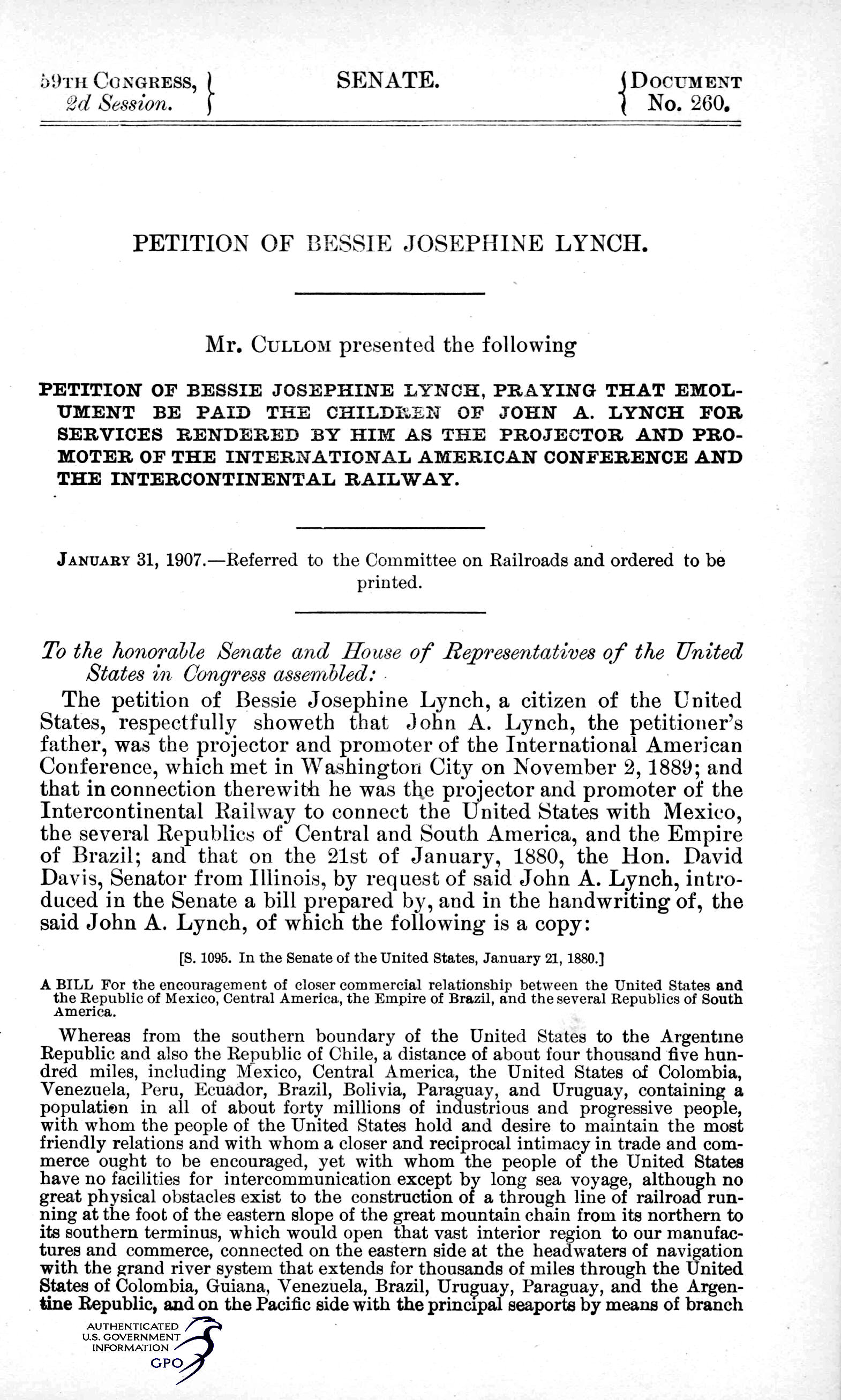
Open original Senate document (PDF).
In 1907, Senator Shelby M. Cullom introduced legislation at the request of Bessie Josephine Lynch, acting as administratrix of her father’s estate. The proposal sought compensation for what she described as John Arthur Lynch’s role in promoting ideas that contributed to the International American Conference and the Intercontinental Railway movement.
Newspaper accounts reported that the claim sought an appropriation of $500,000. Bessie argued that her father had advocated these concepts decades earlier and pointed to legislation introduced by Senator David Davis in 1880 as supporting evidence.
The claim did not succeed, but it demonstrates that Lynch’s work continued to attract attention in Congress years after his death.
Whether or not all of Lynch’s claims to priority can be fully verified today, the surviving documentary record leaves little doubt that he was an energetic advocate of large-scale transportation and infrastructure projects. His ideas reached the United States Senate, received federal consideration, and formed part of a broader movement that sought to connect distant regions through improved communications and transportation.
Lynch in the InterBering Chronology
The significance of John Arthur Lynch lies not in the construction of a railway, bridge, or tunnel, but in the early promotion of concepts that later became central to discussions of a Bering Strait connection.
His published writings, legislative initiatives, and public advocacy belong to the formative period of the idea’s history. Decades before many of the better-known proposals of the twentieth century, Lynch was already discussing transportation routes extending through Alaska toward Asia and Europe.
The surviving evidence demonstrates that he was among the earliest documented American advocates of transportation concepts linking North America and Asia through Alaska. His proposals entered Congressional discussions, received federal review, and continued to be defended by his family after his death.
For these reasons, John Arthur Lynch occupies an important place near the beginning of the InterBering chronology.
Conclusion
The history of Bering Strait transportation ideas did not begin with tunnels, bridges, or modern engineering studies. It evolved gradually through the efforts of explorers, telegraph promoters, railroad visionaries, public officials, and private citizens who sought new ways to connect distant regions of the world.
John Arthur Lynch belonged to this formative generation. An Irish-born lawyer, Civil War officer, legislative advocate, and promoter of public works, he spent much of his life advancing projects designed to improve transportation, commerce, and communication. During the 1870s and 1880s he expanded these interests beyond the borders of the United States and began promoting transportation concepts that extended through Alaska toward Asia.
Although none of his transportation proposals were ultimately constructed, his ideas entered the legislative and governmental record of the United States. The 1886 review by John Wesley Powell demonstrated that transportation development directed toward Alaska had progressed beyond private speculation and had become a subject of official consideration.
More than a century later, Lynch remains a largely forgotten figure. Yet the documentary record reveals a man whose vision reached far beyond the horizons of his own time. His story illustrates how major transportation concepts often begin long before the technology, political conditions, or financial resources exist to bring them into reality.
In the history of efforts to connect North America and Asia, John Arthur Lynch deserves recognition as one of the earliest documented advocates of that enduring idea.
Timeline
| Year | Event |
|---|---|
| 1867 | The United States purchases Alaska from Russia, changing America’s geographic relationship to Asia. |
| 1861–1865 | Lynch serves in the Union Army during the Civil War and later becomes known as Major John A. Lynch. |
| 1866 | Cyrus W. Field’s Atlantic Telegraph Company completes a durable transatlantic cable, ending the need for the Russian-American Telegraph route. |
| 1873 | Lynch publishes work on the Atlantic and Great Western Canal. |
| 1877 | Lynch later recalls an article in the Cincinnati Commercial proposing routes through Alaska and Kamchatka toward Asia and Europe. |
| 1879 | Senator David Davis introduces a Marshall statue bill associated with Lynch. |
| 1880 | Senator David Davis introduces legislation related to Lynch’s international transportation ideas. |
| 1885 | Legislation supporting the Lafayette Monument becomes law. |
| 1886 | In response to Lynch’s petition, a Senate bill concerning a route between the United States, Asiatic Russia, and Japan receives review through the Interior Department and John Wesley Powell. |
| 1889 | Lynch’s eldest son, John Joseph Lynch, dies in Washington, D.C. |
| 1891 | Marie Louise O’Brien Lynch dies; the Lafayette Monument is completed in Washington. |
| 1899 | Lynch publishes a letter in The Washington Post defending his claim as an originator of the Intercontinental Railway project. |
| 1900 | John Arthur Lynch dies in Washington, D.C.; Bessie Josephine Lynch publishes a letter defending his role in the Lafayette Monument. |
| 1907 | Bessie Josephine Lynch supports a Congressional petition seeking recognition and compensation for her father’s ideas. |
| 1928 | Anna Rosalia Lynch dies; her obituary confirms additional family details and the Hayes White House connection. |
Unresolved Questions and Future Research
The surviving evidence now makes it possible to reconstruct the main outlines of John Arthur Lynch’s life and public work. At the same time, several questions remain open and may be answered by future archival discoveries.
- The original Cincinnati Commercial article of January 19, 1877, cited by Lynch in 1899, has not yet been located.
- Additional correspondence may exist in federal archives, Congressional papers, or Smithsonian records relating to Lynch’s petitions and transportation proposals.
- The exact sequence of Lynch’s activities between the 1880 Congressional initiative and the 1886 Senate review remains incomplete.
- No confirmed portrait of John Arthur Lynch has yet been identified.
Because the InterBering historical archive is under continuing development, this page may be updated when additional documents, newspaper articles, images, or archival references become available.
Sources
Government and Congressional Records
- Petition of Bessie Josephine Lynch to the United States Congress — Senate document, 1907.
- Senate Miscellaneous Document No. 22, 49th Congress — document connected with the feasibility of the railroad proposed in the Alaska–Asia route bill.
- Court of Claims report concerning John A. Lynch — material related to Lynch’s Civil War-era claims.
Contemporary Newspaper Sources
- The Washington Post, August 9, 1889: death notice of John Joseph Lynch.
- The Washington Post, October 18, 1891: funeral notice of Mrs. Marie Louise Lynch.
- The Washington Post, April 18, 1899: “The Intercontinental Railway. John Arthur Lynch’s Claim as Originator of the Project.”
- The Washington Post, May 8, 1900: death notice of John Arthur Lynch.
- The Washington Post, May 22, 1900: obituary, “Maj. John A. Lynch.”
- The Baltimore Sun, July 11, 1900: “The Lafayette Statue,” letter by Bessie Josephine Lynch.
- Beloit Daily News, March 7, 1907: “Wants $500,000 for an Idea.”
- The Washington Post, January 20, 1914: death notice of Maria Louise Lynch, eldest daughter of John Arthur Lynch.
- Evening Star, January 6, 1928: obituary of Anna Rosalia Lynch.
Published Works and Historical Background
- A Letter to the People of the United States on the Present Condition of Public Affairs — published under the name John A. Than, with handwritten attribution identifying it as a pseudonym of John A. Lynch.
- An Address on the Subject of the Atlantic and Great Western Canal — Washington City, 1873.
- Terrence Cole, historical essay on roads and railroads to Siberia, reproduced on InterBering.
- Historical materials relating to the Russian-American Telegraph / Collins Overland Telegraph project.
- Historical materials concerning the Alaska Purchase of 1867, Hinton Rowan Helper, William Gilpin, and early intercontinental transportation proposals.
Research Note
Because John Arthur Lynch remains a relatively obscure historical figure, much of the information presented in this article has been reconstructed from contemporary newspapers, Congressional references, public records, and family notices published during his lifetime and in the years immediately following his death. Additional documentation may emerge in the future and contribute to a more complete understanding of his role in the early history of Alaska–Asia transportation proposals.
Research and historical reconstruction prepared by Fyodor G. Soloview for the InterBering Pioneers Encyclopedia.